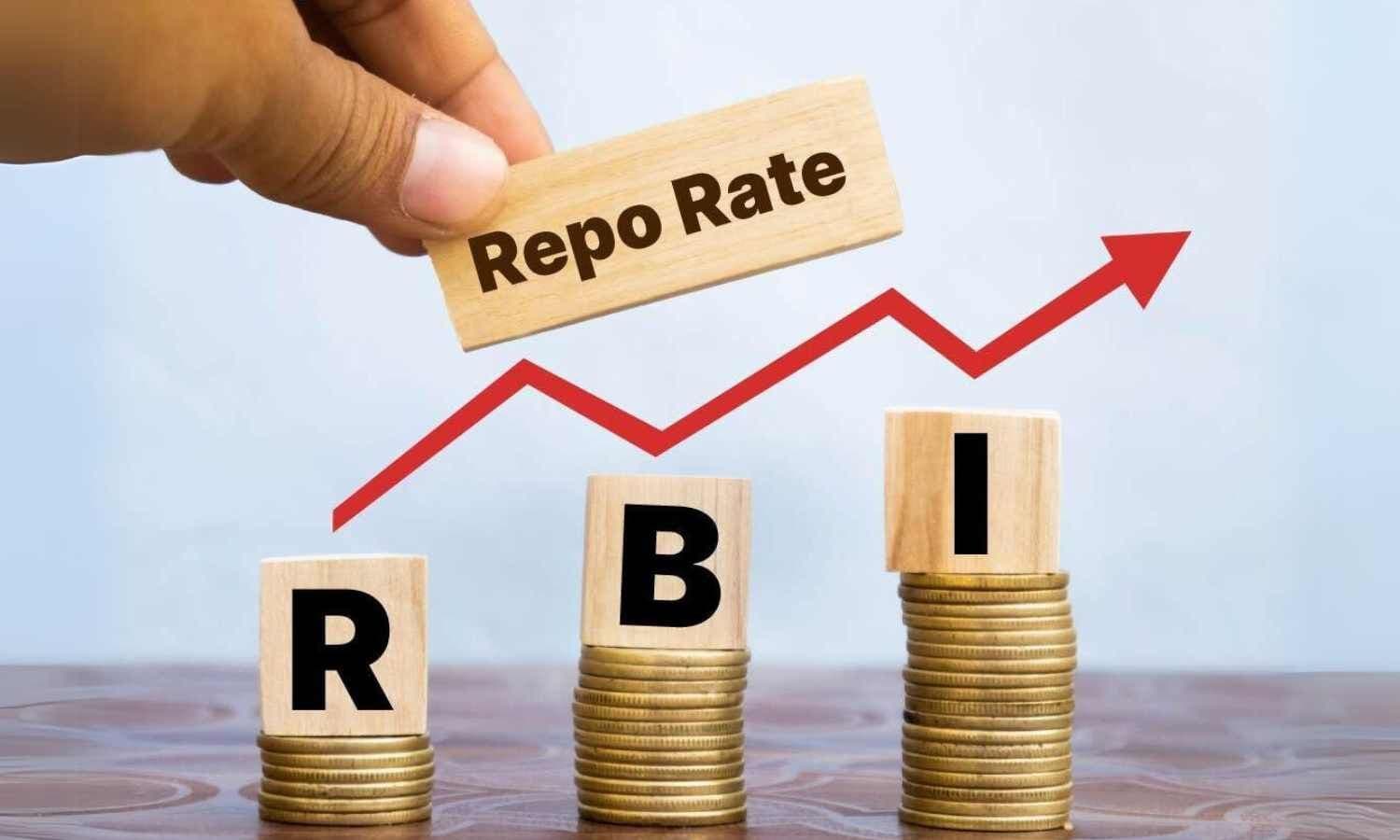
What is the Repo Rate? Understanding its Meaning and Economic Impact

Loan in
60 Minutes
The repo rate (which stands for Repurchase Option) is the conventional interest rate at which the Reserve Bank of India supplies short-term financing to commercial financial institutions for federal government securities. It works as the primary device for managing the economy, having a direct influence on the rising cost of living, funding installations, and returns on deals with deposits.
Quick Reads
-
If any commercial bank suddenly faces a cash flow shortage and lacks liquid funds, it can pledge the government securities it holds to the RBI and quickly obtain emergency working capital to sustain its daily operations.
-
The RBI will hike the repo rate to withdraw excess cash circulating in the market back to the central bank, cool down overheated price increases, and rein in runaway consumption momentum.
-
As long as the repo rate is raised, the monthly EMI on your floating-rate home loans and auto loans will almost immediately increase, with very little lag time.
-
Interest rate hikes are not all bad news; banks usually simultaneously raise the interest rate on Fixed Deposit (FD) to attract people to deposit new funds into banks and replenish their capital pools.
-
In India, the six-member Monetary Policy Committee (MPC) reassesses the current economic situation every two months to set a new value for this repo rate.
Every few months, India's financial news outlets fixate on the percentage figure announced by the RBI, with the full attention of all channels focused on this number. You will see news tickers at the bottom of channels flashing nonstop, market analysts arguing over changes of just a few decimal points, and real estate developers gripping their fists in anxiety, fearing that changes to this number will ruin their businesses. But why should people who are busy managing household expenses and paying their mortgages on schedule care about what is repo rate or what this has to do with their daily expenses?
This single interest rate is like the core temperature of India's entire financial ecosystem. As soon as the RBI adjusts this regulatory knob, every rupee circulating across the country will feel the change, and no one can escape it. From the monthly loan installment automatically deducted from your salary account to the interest earned on your grandmother's savings deposit, the repo rate quietly dictates everything behind the scenes; it determines how much your money is worth today, and what it can buy in the future.
What is Repo Rate?
The repo rate meaning in simple words, is the interest rate commercial banks must pay when they borrow short-term working capital directly from the RBI. It can be understood as a "wholesale lending rate" for funds exclusively for banks, operating at a different level than the retail loans ordinary people take out from banks. Just as you would turn to a bank for temporary cash flow support, commercial banks turn to the Reserve Bank of India (RBI) for help when they lack sufficient cash for their daily operations.
The RBI does not issue unsecured loans for no reason, nor does it lend money to banks casually. The entire transaction is based on a repurchase agreement from start to finish, and the actual operational process is very clear, proceeding step by step as follows:
-
First, a commercial bank temporarily faces insufficient cash reserves, unable to meet daily deposit withdrawals and lending needs.
-
Next, the bank pledges part of the government securities it holds, such as short-term treasury bills or sovereign bonds, to the RBI as collateral to prove its ability to repay the funds.
-
Then, the RBI lends the required funds to the bank at the pre-agreed repo rate, helping it tide over the temporary crisis.
-
Finally, on the agreed-upon date, the commercial bank buys back the previously pledged securities, while repaying the previously agreed principal and interest, and the entire transaction is completed.
Calculation Formula for the Repurchase Price
The calculation method for the repurchase price that the bank must pay when the funds mature is:
Repurchase Price = Borrowed Principal + Repo Interest
For the borrowing bank, the actual capital cost it bears is the difference between the funds it obtained from selling the pledged assets to the central bank and the funds it spent to buy those assets back.
What is the Difference Between Repo Rate and Reverse Repo Rate?
The scenario corresponding to the repo rate is commercial banks borrowing money from the Reserve Bank of India (RBI). The reverse repo rate operates in the exact opposite direction. If any commercial bank accumulates excess idle funds and wants to earn a steady low-risk interest income, it will deposit that excess cash with the Reserve Bank of India. When the bank hands over this working capital to the central bank, the central bank must pay interest to the depositing banks, and the rate used for this is the reverse repo rate.
|
Feature |
Repo Rate |
Reverse Repo Rate |
|
Basic Definition |
Rate charged by the RBI to lend to commercial banks |
Rate paid by the RBI to borrow from commercial banks |
|
Primary Purpose |
Injects liquidity and reins in high inflation |
Absorbs excess liquidity floating around the market |
|
Movement of Securities |
Banks pledge sovereign bonds to the RBI |
The RBI transfers securities to banks |
|
Relative Level |
Stays consistently higher than the reverse repo rate |
Stays lower to discourage banks from parking too much cash |
|
Retail Impact |
Dictates home loan rates and business borrowing costs |
Sets the floor for short-term interbank money rates |
How Does the RBI Use Repo Rate to Manage the Economy?
The Reserve Bank of India (RBI) has a statutory mandate to keep the consumer inflation rate stable at around 4%, with a tolerance band of 2% above or below this target. For this central bank, the repo rate is its most precise and powerful tool for regulating economic conditions.
What Happens When the RBI Hikes the Repo Rate?
Take a scenario, for example: if the prices of agricultural products such as vegetables suddenly surge, energy costs such as fuel rise sharply, and people keep spending, pushing the inflation rate above the 6% upper limit, the Reserve Bank of India (RBI) will step in to raise the repo rate, which serves as the benchmark interest rate.
-
The cost of overnight interbank lending, which is borrowed for just one day, immediately rises.
-
To protect their original profit margins, banks will raise the interest rates on all personal loans, auto loans, and corporate loans they issue, passing on their increased borrowing costs entirely to borrowing customers.
-
People will think twice before taking out new personal consumption loans; enterprises will also temporarily put their originally planned investment and expansion plans on hold.
-
Nearly all industries' spending momentum, from residents' daily consumption to enterprises' various expenditures, cools down. Sellers can no longer keep raising retail prices by taking advantage of strong consumer demand, and the national inflation data gradually stabilizes.
What Happens When the RBI Cuts the Repo Rate?
Consider another scenario: Economic growth slows, factory output starts to decline, and enterprises across all industries halt their hiring plans. To stimulate the economy and reawaken market vitality, the Reserve Bank of India will cut this benchmark interest rate.
-
The cost of funds the central bank lends to banks decreases, so the cost for banks to issue loans also drops.
-
All banks will actively lower their lending rates to compete to attract new customers to take out loans.
-
Loans become cheaper, so people are willing to borrow money to buy homes and cars, and enterprises are also willing to borrow funds to invest in building new factories.
-
The economy regains its growth momentum, new jobs are created, and market demand gradually recovers.
Conclusion
The repo rate definition is like the core pulse of your personal financial situation; it simultaneously determines the cost of borrowing money and the return you earn from saving money. When the central bank raises the repo rate, the most direct effect is to curb the runaway growth of household daily expenses, preventing vegetable and fuel prices from rising uncontrollably, but it also causes your monthly loan repayments to increase, adding to your monthly expenditure pressure.
Conversely, if the central bank cuts the repo rate, it creates much-needed breathing room for your household's monthly budget; your monthly expenses decrease, and you have more disposable cash. But it also lowers the returns on low-risk stable savings products such as fixed deposits, reducing the income of people who live off interest.
About the Author

The six-member Monetary Policy Committee (MPC) of the Reserve Bank of India is the specialized body responsible for setting the repo rate. Established in 2016, the committee has three internal officials from the Reserve Bank of India, led by the RBI Governor, and the other three are independent economists appointed by the Indian central government, with no affiliation to the central bank. The committee holds a meeting every two months, and all interest rate adjustment matters are finalized by a vote of the members.
The repo rate applies to short-term bridge loans that banks apply for by pledging government securities. Banks only borrow the funds temporarily to manage cash flow and must redeem the pledged securities when the loan matures. The bank rate applies to unsecured long-term loans that commercial banks apply for. These funds are mainly used to provide conventional financial turnover support for banks, and in addition, if a bank has a default or overdue payment, penalty interest is also calculated based on this rate.
No, the actual situation may even be the complete opposite. Interest rate cuts lower borrowing costs, giving consumers and enterprises across the economy more disposable income, so everyone has money to spend and is willing to borrow to spend. In a low-interest-rate environment, if the market's total consumer demand exceeds the total supply of goods and services, and supply cannot keep up with demand, interest rate cuts will instead push prices higher and higher, and the inflation rate will not fall. It will rise even faster. This is why the Reserve Bank of India only implements interest rate cuts after confirming that inflation is fully under control and will not surge again.
Lower interest rates do reduce borrowing costs, encourage ordinary households to spend more, and drive enterprises to launch large-scale capital investment projects, boosting economic growth. But if the economy is still plagued by supply chain disruptions, with goods unable to be manufactured or transported to markets, and the Reserve Bank of India cuts interest rates too quickly, this move could trigger excessive inflation. There is too much money in the market and too few goods; prices soar, while also putting downward pressure on the value of the Indian rupee, making the rupee worth less and less.
What is Repo Rate?
What is the Difference Between Repo Rate and Reverse Repo Rate?
How Does the RBI Use Repo Rate to Manage the Economy?
Conclusion