
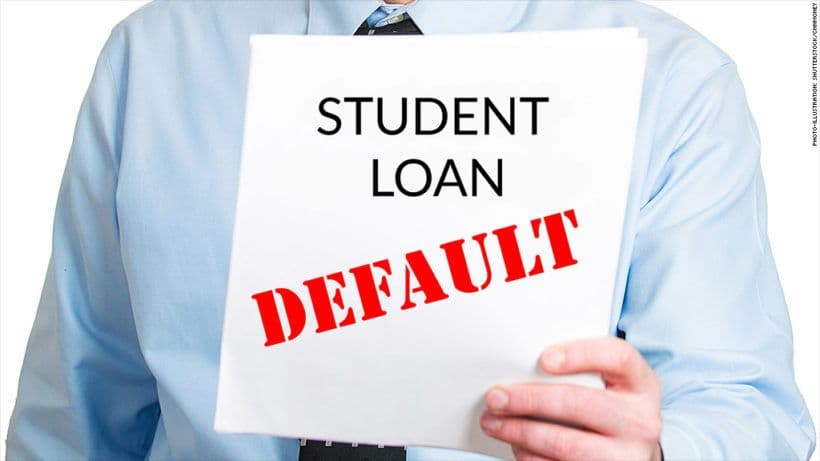
What It Really Means to Default on an Education Loan in India
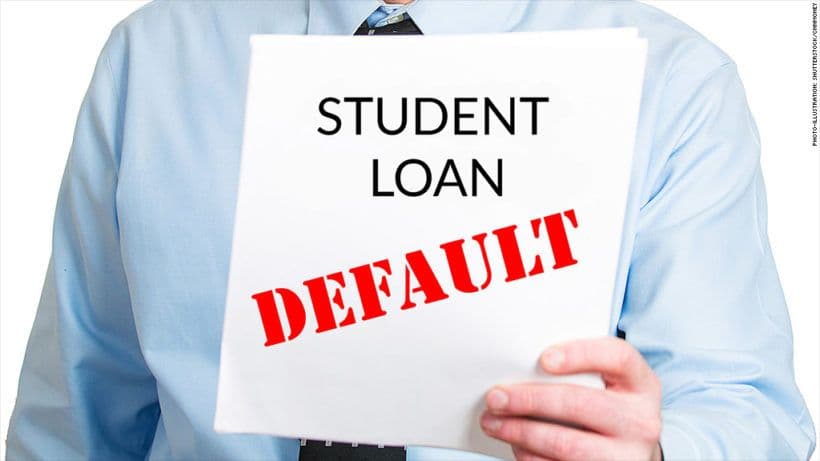

Loan in
60 Minutes
Introduction
A default on an education loan occurs when a borrower fails to make EMI payments for 90 consecutive days, at which point the lender classifies the account as a Non-Performing Asset (NPA). A notable portion of education loans in India have turned into NPAs in recent years, highlighting the financial challenges faced by young borrowers.
The consequences extend far beyond late fees. A default on education loan repayment can significantly impact the borrower’s CIBIL score, legal proceedings through Debt Recovery Tribunals or the SARFAESI Act (for secured loans), co-signer credit damage, potential wage garnishment, and a negative mark that stays visible on credit reports for 7 years.
What Happens When You Default on an Education Loan
The lender does not declare default overnight. The process follows a defined timeline with escalating consequences at each stage.
|
Stage |
Classification |
What Happens |
CIBIL Impact |
|
1-30 Days |
SMA-0 |
Account flagged internally. Recovery calls begin. |
Not yet reported |
|
31-60 Days |
SMA-1 |
Formal notices. Late fees + penal interest accumulate. |
30-50 point drop |
|
61-90 Days |
SMA-2 |
Aggressive recovery. Legal notices possible. |
Additional 40-60 point drop |
|
90+ Days |
NPA (Default) |
Official default. SARFAESI for secured loans. DRT/civil court proceedings. |
100-150 point crash. Visible for 7 years. |
Take Priya’s situation. She is 24, an MBA graduate, first job paying ₹28,000 per month. Her education loan EMI was ₹14,500. After renting (₹8,000 in a shared flat) and basic living costs, she had maybe ₹2,000 left for everything else. She missed three EMIs. By day 91, her lender reported it to CIBIL automatically. No human reviews it, no appeals process. Her score crashed by roughly 120 points. This single default can remain visible on the credit report for several years.
Even a single delayed EMI reduces 30 to 50 points. The distinction between "delayed" and "defaulted" matters legally, but both leave scars on the report. Understanding factors affecting CIBIL score helps borrowers gauge the real damage.
For secured loans with collateral (property, fixed deposits), the lender can invoke the SARFAESI Act after NPA classification, meaning they take possession of the pledged asset without a court order. Unsecured education loans follow a slower route, through arbitration or the Debt Recovery Tribunal.
Legal and Financial Fallout of Education Loan Default
The damage branches out in directions most borrowers do not anticipate.
Credit score destruction is immediate. A default on an education loan slaps a "written-off" or "settled" status on the credit report. Banks treat this like a biohazard. Even after clearing the dues, that tag sits there for 7 years from the first missed payment. Climbing from a score of 520 back above 750 requires 24 to 36 months of disciplined behaviour at minimum. Knowing what constitutes a good CIBIL score helps set realistic recovery targets.
Legal proceedings are expensive for everyone. Loans above ₹20 lakhs go to the Debt Recovery Tribunal. Below that, civil court. Either way, legal costs pile up fast, ₹15,000 to ₹50,000 in fees, and the borrower typically gets saddled with those costs if the lender wins.
Co-signers pay the price too. Consider Rajesh, 52, state government employee in Chennai who co-signed his daughter’s ₹8 lakh education loan. Eight months after graduation, she lost her job. The default hit both their CIBIL reports. Rajesh watched his score slide from 780 to 640. Three months later, a bank turned down his personal loan application. The CIBIL score requirements for education loans apply equally to co-signers, a fact most families discover too late.
Wage garnishment is real but rare. Courts can order employers to deduct a portion of salary before it reaches the borrower’s bank account. With secured loans, SARFAESI proceedings sometimes end in property auctions after a 60-day notice period.
Then there is the tax angle. If a lender writes off the loan amount, tax authorities may treat that written-off sum as "income." Borrowers occasionally receive a tax demand for money they never actually held as cash.
How to Get Student Loans Out of Default
Recovery has concrete steps. The critical part is acting before legal proceedings begin. Once lawyers enter the picture, everything gets slower and more expensive.
|
Recovery Option |
What It Involves |
Credit Report Status |
Best For |
|
Loan Restructuring |
Extended tenure, lower EMI, moratorium up to 24 months |
Stays "Active" (no negative tag) |
Borrowers facing temporary hardship |
|
One-Time Settlement |
Pay 60-80% of outstanding as lump sum |
"Settled" (red flag for lenders) |
Borrowers unable to pay full amount |
|
Full Repayment via Personal Loan |
Take personal loan to clear entire education loan balance |
"Closed" (cleanest outcome) |
Borrowers with stable income wanting clean credit |
Call the loan department directly, not the recovery agent. Restructuring is cheaper for banks than litigation. Ask about stretching the tenure (same total amount, lower monthly EMI), temporary moratorium relief, or a combination. Under RBI norms, lenders can grant education loan moratoriums lasting up to 24 months when borrowers show genuine financial hardship. Most people do not know if this option exists.
If paying everything back is not realistic, push for one-time settlement. Lenders may, in some cases, agree to a reduced lump-sum settlement. Amit’s case: he owed ₹6.2 lakhs (14 months overdue), and the lender agreed to ₹4.35 lakhs. He saved close to ₹1.85 lakhs. The downside: his credit report now reads "settled" instead of "closed," still a red flag for future lenders.
The smarter route for those with stable income: use a personal loan to pay off the education loan fully. When the full outstanding amount is paid (not a settlement), the education loan status changes to "closed" on the credit report. That single word, "closed" versus "settled," makes a massive difference in how future lenders view the applicant.
Finnable offers personal loans between ₹50,000 and ₹10 lakhs, with interest rates from 15% p.a. on a reducing balance method. The evaluation approach does not fixate on the CIBIL number in isolation. The team looks at whether salary has been hitting the account steadily for 6+ months, what kind of company the applicant works for, and whether bank statements show healthy patterns. For someone recovering from defaulted student loans, that kind of nuanced review changes everything.
Credit Score Recovery Timeline After Default
People always ask how long it takes to improve CIBIL score after a default. Here is the realistic trajectory.
|
Timeline |
What Happens |
Expected Score Movement |
|
Months 1-3 |
"Closed" status appears. Bleeding stops. |
+20 to 40 points |
|
Months 4-12 |
Consistent EMI payments on new credit. Secured card usage. |
+50 to 80 points (530 to 620 range) |
|
Months 12-24 |
Clean track record builds. No fresh negative entries. |
650 to 700 zone |
|
Months 24-36 |
Credit utilisation under 30%. No multiple applications. |
750+ achievable |
How NBFCs Evaluate Applicants Who Have Defaulted on Education Loans
Walk into a bank after a default on education loan records shows up on the credit report, and most relationship managers will not even pull up the application screen. Automatic rejection.
NBFCs operate on different logic. Finnable uses an evaluation model that looks at income stability over 6 to 12 months, the employer’s track record, and banking patterns (cheque bounces, savings consistency). These signals paint a much fuller picture than CIBIL alone.
Someone who experienced a default on education loan repayment two years back but has since cleared dues and stayed employed has a genuine shot at approval. The fully digital process can wrap up disbursal in 60 minutes.
The frustrating reality: too many people with old defaults assume formal credit is permanently off-limits. So, they borrow from informal sources at 36% to 48% interest. That spiral makes recovery harder, not easier.
Preventing Education Loan Default Before It Starts
The cost of preventing a default on education loan repayment is a fraction of what recovery demands. Most people waste their moratorium period. Education loans come with a repayment holiday covering the study period plus 6 to 12 months after course completion. Zero EMI pressure during this window sounds great, except simple interest quietly piles up. A graduate who sends even ₹2,500 a month toward the loan during moratorium will see a noticeably lower EMI when repayment begins. Understanding how EMI works helps graduates plan these early payments effectively.
Link auto-debit to a salary account on day one. A surprising number of defaults happen because of forgetfulness, not financial inability. Setting up a standing instruction for even ₹5,000 per month keeps the account healthy and away from SMA classifications.
If you think you might miss a payment, call first. One phone call before the due date can change the entire trajectory. Lenders respond to honesty with restructuring options. They respond to silence with legal notices.
Save up three months of EMI as emergency buffer. Quick math: ₹12,000 EMI multiplied by 3 equals ₹36,000 in a separate account. Fresh graduates earning ₹25,000 will find this hard. The workaround: set aside ₹4,500 per month for 8 months. When something goes wrong, this money keeps the loan healthy.
Anyone looking at options for managing or consolidating debt can use the personal loan EMI calculator before signing anything to help set realistic expectations.
Rebuilding After an Education Loan Default: A Practical Roadmap
A default on education loan repayment feels like a permanent financial sentence. It is not. Credit scores recover. Legal exposure ends once debt is cleared. Families affected by co-signer defaults can and do rebuild together.
The concrete path forward: for borrowers who have stabilised income and want to close out defaulted student loans without a "settled" tag, Finnable’s personal loan provides that route. Minimum CIBIL requirement of 675, rates from 15% to 30.99% p.a., tenure of 6 to 60 months, disbursal in as fast as 60 minutes.
To improve CIBIL score after a default, the first step matters more than a perfect plan. Start small, stay consistent, keep payments on time. The numbers catch up eventually.
About the Author

After 90 days of missed payments, the lender classifies the account as an NPA and reports to CIBIL. The score hit is typically 100 to 150 points. Secured loans carry extra risk because of the SARFAESI Act, which gives lenders power to take collateral without a court order. The NPA tag sits on the credit report for 7 years.
Banks almost always say no. NBFCs are a different story. They weigh factors like income stability and banking habits alongside the CIBIL number. A borrower with a resolved default and a score of 675+ has a genuine shot at approval. Many borrowers looking to get student loans out of default use a personal loan to close the education loan account completely.
The entry persists for 7 years from the date of the first unpaid EMI. The drag on the actual score gets weaker over time, particularly if the borrower builds a clean payment record. Visible improvement tends to show up in the 24-36 month range.
Yes. A co-signer holds equal legal responsibility. When the primary borrower defaults, the co-signer’s CIBIL report takes an identical hit. Lenders can and do go after co-signers independently for recovery.
Absolutely. If the borrower pays the complete outstanding balance including accumulated interest and late fees, the account moves to "closed" status rather than "settled." Taking a personal loan through Finnable to make this full payment has become a practical approach for borrowers who want to avoid the settlement tag.
Introduction
What Happens When You Default on an Education Loan
Legal and Financial Fallout of Education Loan Default
How to Get Student Loans Out of Default
Credit Score Recovery Timeline After Default
How NBFCs Evaluate Applicants Who Have Defaulted on Education Loans
Preventing Education Loan Default Before It Starts
Rebuilding After an Education Loan Default: A Practical Roadmap