
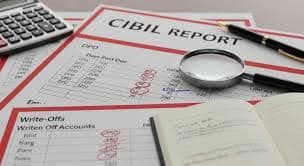
CIBIL Consumer Dispute: How to Fix & Correct Credit Report Errors
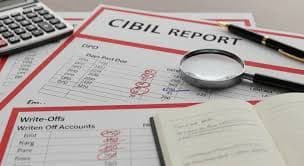

Are you seeing any incorrect information on your CIBIL report? It could be a loan you paid off earlier still showing as outstanding, information about an account that isn't yours, or a payment that is incorrectly marked as late for an account when you have paid the amount on time. These errors on your credit report will drag your score down for no reason.
The fix? A CIBIL consumer dispute. You can file this dispute free of charge, and it takes about 30 days to resolve. Once you file the dispute and once the mistakes in your CIBIL report are rectified, it can help boost your score.
Scroll down to read more on CIBIL reports, CIBIL consumer dispute and how to correct errors on your credit report.
What is a CIBIL Report and Why It Matters
Your CIBIL report provides complete information about your financial history. It records information about every loan, every credit card, every credit inquiry for your account.
Banks fetch this report before approving your loan applications. A clean report with a good CIBIL score improves your chances of getting faster loan approval at better interest rates. You can also get in touch with Finnable, a leading fintech platform, to know more about the minimum CIBIL score for your personal loan.
On the other hand, if there is even one erroneous entry in the report, it can lead to instant loan rejection or loan approval at higher interest rates. Fixing any such error in your CIBIL report can make a huge difference.
Common Types of Information in Your CIBIL Report
Your report mainly contains these four sections:
- Personal Information: Name, date of birth, PAN, address, phone numbers, employer details.
- Account Information: All credit accounts (loans, credit cards), current balances, credit limits, payment history, account status.
- Inquiry Information: Every time a lender pulled your report after a loan or card application.
- Summary: Total accounts, types of credit, payment behaviour overview.
How Data is Collected and Updated
Banks and NBFCs report your account information to CIBIL every month. They send information about the payment status, balance changes and account closures.
Here are some reasons due to which may lead to error(s) in your credit report:
- A system glitch in the bank leading to incorrect recording of the payment date.
- Manual data entry mistake by the bank’s staff.
- Delay in updating closed accounts.
- Duplicate accounts created during system migrations.
- Account wrongly linked to your PAN due to similar names.
CIBIL doesn't verify this data. It compiles what the lenders report. If a bank sends wrong information, it goes on your report until you raise a CIBIL consumer dispute.
What is a CIBIL consumer dispute and why should you raise one?
A CIBIL consumer dispute is a formal request to correct errors on your credit report. You should raise one whenever you spot incorrect information like wrong payment status, accounts you don't recognise, or outdated personal details. Correcting errors can improve your score and loan approval chances.
Identifying Errors on Your Credit Report
Here are some common errors that you may see on your credit report:
- Payment status errors: Loan paid on time but marked 30/60/90 days late. Most damaging to score.
- Account status mistakes: Closed accounts showing as open. Settled accounts showing as written off.
- Duplicate entries: Same loan appearing twice, doubling your apparent debt.
- Identity mix-ups: Someone else's account on your report due to similar name or error related to identification.
- Outdated information: Old addresses, previous employers, incorrect phone numbers.
- Wrong balances: Outstanding amount higher than actual. Credit limit incorrectly reported.
- Fraudulent accounts: Accounts you never opened, possibly from identity theft.
How Errors Affect Your Credit Score
Understanding how your CIBIL score is calculated shows even a single error can have an adverse impact on your credit report.
Some of the most common errors on your credit report are listed below:
Examples of Personal Information Errors
- Name spelled differently across accounts.
- Incorrect date of birth.
- Incorrect PAN (partial digits wrong).
- Old address still listed as current.
- Previous employer listed as current.
Account and Transaction Detail Mistakes
- Credit limit reported lower than actual.
- EMI amount incorrectly stated.
- Loan tenure showing wrong duration.
- Interest type (fixed/floating) mislabelled.
- Account ownership wrongly listed as individual vs joint.
Unfamiliar or Duplicate Enquiries
- Enquiry from a bank you never applied to.
- Multiple enquiries for same application.
- Enquiries showing from years ago that should have dropped off.
Each hard enquiry affects your score slightly. Wrong enquiries compound the damage.
While some of them may seem like minor issues, they can end up causing problems. Lenders cross-verify every detail in your CIBIL report. Any mismatches in your report can raise fraud concerns as well. Therefore, you should raise a CIBIL Consumer Dispute without fail for any such error to make sure that there is no negative impact on your credit score.
How to Fix Errors on Your Credit Report
Step-by-Step Guide to Raising a CIBIL Consumer Dispute
- Step 1: Get your CIBIL report. You can check your credit score with Finnable and download the full report.
- Step 2: Review every section carefully. Compare against your own records: bank statements, loan closure letters, payment receipts.
- Step 3: Document each error. Note the exact field, what it shows, and what it should show.
- Step 4: Gather supporting evidence. Loan closure certificates, payment confirmation, bank statements showing correct information.
- Step 5: Log into the myCIBIL portal. Navigate to the "Dispute Resolution" section.
- Step 6: Select the specific data field to dispute. CIBIL requires you to identify exact fields, not general complaints.
- Step 7: Upload supporting documents. Keep file sizes under limit (usually 5MB per file).
- Step 8: Submit and save the dispute reference number.
Required Documents and Information for Disputes
Different errors require different proof:
- For payment errors: Bank statement showing the payment date, transaction receipt, loan account statement from bank.
- For account closure disputes: Loan closure letter, final settlement receipt, NOC from lender.
- For personal information: Updated ID proof (Aadhaar, PAN, passport) showing correct details.
- For fraudulent accounts: Police complaint copy (FIR), declaration that account was never opened by you.
- For duplicate entries: Screenshots showing both entries, bank confirmation that only one account exists.
Submitting Disputes Online via CIBIL Portal
Fastest method. Available 24/7.
- Go to www.cibil.com
- Log into myCIBIL account (create one if you don't have)
- View your credit report
- Click "Dispute" next to any incorrect field
- Select reason for dispute from dropdown
- Add explanation in text box
- Upload supporting documents
- Submit
You'll receive confirmation email with dispute ID. Track progress through same portal.
Alternative Ways to Raise Disputes (Email, Call, Visit)
Email: Send dispute to info@cibil.com. Include your full name, CIBIL ID, report date, specific error details, and attach documents.
Phone: Call CIBIL helpline at 022-61404300. Explain your issue. They'll guide you on next steps.
Written letter: Send to CIBIL's registered office in Mumbai. Include all details and document copies. Slowest method.
Online portal works fastest. Email takes longer. Phone and letter are best for complex cases needing explanation.
Dispute Timeframes and What to Expect
CIBIL has 30 days to resolve disputes. That's the RBI-mandated timeline.
After you file:
Days 1-3: CIBIL forwards dispute to the concerned lender (bank/NBFC).
Days 4-25: Lender investigates and responds.
Days 26-30: CIBIL updates report based on lender's response.
If dispute isn't resolved within 30 days? RBI guidelines require CIBIL to compensate you ₹100 per day of delay, up to ₹1,000.
Tracking and Following Up on Your Dispute
How to Check Dispute Status via MyCIBIL Account
Login to myCIBIL. Go to "Track Dispute Status" section.
You'll see:
Dispute reference number
Date filed
Current status (Pending/Under Process/Resolved/Rejected)
Response from lender if available
Updated report if changes were made
CIBIL also sends email updates at key stages.
What Happens if a Dispute is Not Resolved on Time
In case your dispute is not resolved beyond 30 days, you can exercise these options:
- File complaint with RBI's Integrated Ombudsman. They oversee credit bureaus.
- Escalate within CIBIL through their grievance redressal mechanism.
- Contact the lender directly with your dispute details.
Moreover, you should document all details like dates, communications, responses, etc. You will need these documents in case there is any escalation.
Understanding the 'Under Dispute' Status
While your dispute is pending, CIBIL marks that field as "Under Dispute."
What this means for you:
- Lenders can see the dispute flag.
- They're supposed to consider that data might be incorrect.
- Your score isn't immediately updated until resolution.
Some lenders ignore the flag. Others give you benefit of doubt. Depends on the institution.
Tips to Prevent Future Errors and Maintain a Healthy Credit Profile
Regular Credit Monitoring Benefits
Check your report at least every 3-4 months. Catch errors early before they cause loan rejections.
CIBIL provides one free report annually. Bank apps often show your score for free. Third-party platforms offer free monitoring.
For detailed improvement strategies, you can visit Finnable to know more about how to improve your CIBIL score.
Keeping Your Profile Details Updated
Whether you have changed your address, phone number, job, etc., you should keep your lenders informed. Updating any such information across your loan or credit card accounts reduces any chances of mix up.
Avoiding Common Credit Report Issues
Keep loan closure documents forever. Banks sometimes report closed loans as active years later.
Save payment receipts for at least 3 years.
Check report after every major credit event: loan closure, credit limit change, new account.
Don't assume banks report correctly. Verify yourself.
How Correct Credit Behaviour Impacts Your Score
Fixing errors helps. But ongoing behaviour matters more. Pay every EMI on time. Keep credit card utilisation under 30%. Don't apply for too many loans in short periods. Maintain old accounts for credit history length.
A dispute fixes past problems. Good behaviour prevents future ones.
Conclusion
Correcting errors on your credit report isn't complicated. It requires attention to detail, proper documentation, and patience for the 30-day resolution window. And a CIBIL consumer dispute is the best way to correct any such errors in your report.
You can start by downloading your credit report. Review it carefully. Document every discrepancy. File disputes with evidence. Follow up until resolved.
Your credit score should reflect your actual financial behaviour. Not data entry mistakes from years ago.
About the Author

Download your full CIBIL report and review each section. Compare against your own records: bank statements, loan closure letters, payment receipts. Look for wrong payment marks, incorrect balances, duplicate accounts, unfamiliar enquiries, and outdated personal information.
Log into myCIBIL portal, navigate to Dispute Resolution, select the specific incorrect field, choose dispute reason, add explanation, upload supporting documents, and submit. You'll receive a reference number for tracking. Alternatively, email info@cibil.com or call 022-61404300.
Standard resolution time is 30 days as mandated by RBI. CIBIL forwards your dispute to the concerned lender who investigates and responds. If resolution takes longer than 30 days, you're entitled to compensation of ₹100 per day delay, maximum ₹1,000.
Yes. You can dispute multiple fields across different sections in the same session. Navigate to each incorrect field, raise individual disputes, and submit. Each field gets its own dispute ID and tracking.
If rejected, review the lender's response for reasoning. Gather stronger evidence and re-file if appropriate. For unresolved disputes beyond 30 days, escalate to RBI's Integrated Ombudsman or use CIBIL's grievance redressal mechanism. Keep all documentation.
What is a CIBIL Report and Why It Matters
Common Types of Information in Your CIBIL Report
What is a CIBIL consumer dispute and why should you raise one?
Identifying Errors on Your Credit Report
How Errors Affect Your Credit Score
How to Fix Errors on Your Credit Report
Tracking and Following Up on Your Dispute
Tips to Prevent Future Errors and Maintain a Healthy Credit Profile
How Correct Credit Behaviour Impacts Your Score
Conclusion


