
700 Credit Score: Where You Stand and What Comes Next

Hit the 700 marks on your CIBIL score? That's a milestone worth acknowledging. You've crossed from "average" into "good" territory. Banks will take you seriously now. Loan applications won't automatically face extra scrutiny.
But here's the thing about 700. It's a threshold, not a destination. You're in the door, but the best seats are still a bit further in. Understanding exactly what a 700-credit score gets you, and what you'd gain by climbing higher, helps you make smart decisions about credit going forward.
What Does a 700 Credit Score Mean?
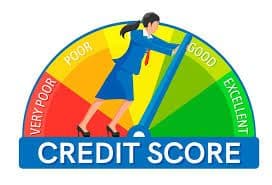
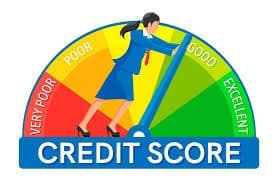
A 700 CIBIL score places you in the "good" credit category in India. Understanding what constitutes a good CIBIL score helps put this in perspective. Here's the context:
|
Range |
Category |
Your Position |
|
300–549 |
Poor |
– |
|
550–649 |
Fair |
– |
|
650–699 |
Average |
Just below you |
|
700–749 |
Good |
You are here |
|
750–799 |
Very Good |
Your next target |
|
800–900 |
Excellent |
Long-term goal |
At 700, you've demonstrated that you can handle credit responsibly. You pay your bills mostly on time. You haven't defaulted on loans. Lenders see you as a moderate-to-low risk borrower.
Most people asking “is 700 credit score good" already know they've reached something meaningful. You have. It's solidly good. Just not excellent yet.
Loan Eligibility with a 700 Credit Score
Let's get practical. What can you actually get approved for with a 700 CIBIL score?
Personal Loans
Status: Accessible from most lenders
Most banks require an minimum CIBIL of 700 for personal loan approval. You've just cleared that bar. NBFCs often approve at lower scores but will definitely work with you at 700.
What to expect:
- Approval from mainstream lenders
- Interest rates in the 15-20% range for most profiles
- Loan amounts based primarily on income
- Standard processing without extra documentation
Here's where Finnable comes in. We offer personal loans from ₹50,000 to ₹10 lakhs with interest rates ranging from 15% to 30.99% p.a. based on your complete financial profile. While we prefer a minimum CIBIL of 675, at 700 you're comfortably in their evaluation range.
What sets us apart is our holistic approach. We at Finnable consider income stability, employer reputation, and banking behaviour. Plus, disbursal can happen in as fast as 60 minutes after approval.
The strategy? If you're at 700 and need funds, you have options. But if you can wait 3 - 4 months to push toward 750, you'll likely qualify for rates at the lower end of that range.
Home Loans
Status: Readily available
Home loans are secured against property, so lenders are comfortable at 700. You'll get approval from major banks and housing finance companies.
Rate reality: Expect rates around 8.5-9.5%, whereas a 780+ borrower might get 8-8.5%. On a ₹50 lakh loan over 20 years, that 1% difference means about ₹10 lakhs extra in interest. Worth thinking about.
Credit Cards
Status: Good cards accessible, premium ones harder
At 700, most mid-tier credit cards are available. Cashback cards, basic travel cards, and shopping cards from major banks will approve you. This is where your 700 credit score credit card options open up significantly compared to scores in the 600s.
What might be harder: Super-premium cards like HDFC Infinia, Axis Magnus, or Amex Platinum typically want 750+. They're not impossible at 700, especially with high income, but approval isn't guaranteed.
Vehicle Loans
Status: Easy access
Car and bike loans are secured, so 700 is comfortably within approval range. You'll get standard rates and full financing options. Dealers won't give you grief about your credit.
What This Costs in Real Terms
₹3 lakh personal loan, 3-year tenure:
|
Credit Score |
Interest Rate |
EMI |
Total Interest |
|
750 |
14% |
₹10,290 |
₹70,440 |
|
700 |
18% |
₹10,850 |
₹90,600 |
|
Difference |
– |
₹560/month |
₹20,160 total |
That's over ₹20,000 extra interest just for the 50-point gap between 700 and 750. On larger loans, the difference scales proportionally. Want to see exactly how rates affect your EMI? Use the EMI calculator to run different scenarios.
Why You're at 700 (and Not Higher)
Something is keeping you from 750+. Identifying it helps you improve. The factors affecting your CIBIL score calculation are pretty consistent across credit bureaus.
Most Likely Factors
- Credit Utilisation Above 30%: If you regularly use more than 30% of your credit card limits, this is probably dragging your score. I've seen people stuck at 700 for years, paying their bills on time, but always carrying 60-70% utilisation. The moment they get that below 30%, they jump to 730-740 within two months.
- Thin Credit File: Limited credit history with only one or two accounts. Lenders can't see enough positive behaviour to push you higher. You might be perfectly responsible, but the algorithm needs data.
- Some Payment Hiccups: Maybe one or two late payments in the past 12-18 months. Nothing serious, but enough to cap your score below 750. Even a single 30-day late payment can hold you back.
- Recent Credit Applications: Multiple applications in the last 6-12 months creating hard inquiries on your report. Each inquiry dings you 5-10 points, and they compound.
- Credit Mix Issues: Only credit cards without any instalment loans, or only loans without any revolving credit. The scoring model likes to see you handle different types of credit.
What's Probably Not the Problem
At 700, you likely don't have:
- Recent default
- Settled accounts
- Write-offs
- Collections
- Serious delinquencies (60+ days)
These would push you below 650. Your 700 CIBIL score indicates you're doing the fundamentals right, just not perfectly.
700 to 750: The Improvement Path
The 50-point jump from 700 to 750 is very achievable with focused effort. I've seen dozens of people make this climb. Here's how to improve your CIBIL score systematically.
Step 1: Attack Credit Utilisation
This is often the quickest win. If you're using 50% of your credit limits, cutting that to 25% can add 30-50 points within 1-2 billing cycles.
Tactics:
- Request credit limit increases (without increasing spending)
- Pay down balances mid-cycle, before statement generation
- Spread spending across multiple cards to keep individual utilisation low
Example: You have two cards with ₹1 lakh limit each. Instead of using ₹80,000 on one card (80% utilisation), use ₹40,000 on each (20% utilisation each). Same spending, better score.
Step 2: Perfect Your Payment Record
From this point forward, never miss a payment. Set up autopay for at least minimum due on every account. A perfect payment record for 6 months significantly boosts your score. Payment history is 35% of your score - it's the single biggest factor.
Step 3: Let Time Work
If your history is thin, patience helps. Each month of responsible credit use adds to your positive track record. Scores naturally climb over time with good behaviour. Your oldest account matters too. Keep it active even if you barely use it.
Step 4: Don't Apply for New Credit
Pause credit applications for 6-12 months unless absolutely necessary. Let existing inquiries age off your report. Each hard inquiry stays visible for 2 years but only impacts your score for about 6 months.
Step 5: Check for Errors
Get your detailed CIBIL report and learn how to read it properly. Look for:
- Accounts that aren't yours
- Closed loans showing as open
- Incorrect balances or limits
- Wrong payment statuses
Dispute any errors through official channels. Sometimes your score is low simply because of reporting mistakes.
Realistic Timeline
|
Starting Score |
Target Score |
Expected Time |
|
700 |
720 |
2–3 months |
|
700 |
750 |
4–6 months |
|
700 |
780 |
8–12 months |
These timelines assume you're aggressively addressing the issues holding you back. If you just maintain status quo, improvement will be much slower.
Should You Wait to Borrow?
The eternal question. Apply now at 700 or wait until you hit 750?
Apply Now If:
- You need the funds urgently (medical emergency, time-sensitive opportunity)
- The loan amount is relatively small (rate difference matters less)
- Your income is strong (compensates for score in lender evaluation)
- The opportunity is time-sensitive (investment, business need)
- You're confident you can't improve your score significantly in 3-6 months
Consider Waiting If:
- You're borrowing a large amount (home loan, large personal loan where 1% matters)
- You can clearly identify what's hurting your score and can fix it
- You have no urgent need and can afford to wait
- 3-6 month wait is practical given your situation
- You know you're about to close an old loan (which might bump your score)
The Middle Ground
Apply now but actively work on improvement. If you get a loan at 700 and improve to 750+ later, you can consider refinancing or balance transfer for better rates. Some lenders even offer rate reductions if your score improves during the loan tenure.
Before applying, check your personal loan eligibility to understand exactly what you qualify for at your current score.
700 vs Other Scores: Perspective
Compared to 650
At 650, you face:
-
Frequent rejections from banks
-
Interest rates 5-8% higher
-
Lower loan amounts approved
-
More documentation requirements
-
Possible need for guarantors or co-applicants
-
Limited 700 credit score credit card options
Your 700 is substantially better. You've crossed into territory where mainstream finance is accessible without jumping through extra hoops.
Compared to 750
At 750, you'd enjoy:
-
The best available interest rates for your income bracket
-
Higher credit limits on cards
-
Pre-approved loan offers in your inbox
-
Access to premium credit cards
-
Faster, easier approvals with minimal documentation
The gap is real but bridgeable. Think of 700 as getting into college. 750 is making the dean's list. Both are achievements, but one opens more doors.
Maximising Your 700 Score
While you work on improvement, get the most from your current position.
Compare Multiple Lenders
Different lenders price differently. One bank might offer 16% at your score while another offers 19%. NBFCs might have different criteria than banks. Shop around before accepting any offer. Don't just go with your salary account bank by default.
Negotiate
If you have strong income and stable employment, use these to negotiate better terms. Lenders have flexibility, especially if you're bringing other business (savings account, insurance, investments). A 700 score with ₹80,000 monthly income often gets better terms than a 750 score with ₹40,000 income.
Time Applications Strategically
Quarter-end often sees banks more eager to disburse loans to meet targets. March, June, September, December can be good times to apply. Sales officers have more negotiating room when they're trying to hit quarterly numbers.
Consider NBFCs
NBFCs like Finnable sometimes offer more competitive rates than banks for certain score ranges. Their digital-first approach also means faster processing - often 60 minutes from approval to disbursal versus 3-5 days at traditional banks. Plus, their holistic evaluation means your 700 CIBIL score isn't the only factor they're considering.
Build the Relationship First
If you have time, open a savings account and use it as your primary account for 2-3 months before applying. Banks are more generous with existing customers who have good banking relationships. It signals stability.
Ready to Move Forward?
Whether you're borrowing now or working to improve first, understanding where you stand helps you make better decisions. A 700 CIBIL score opens doors - just make sure you're walking through the right ones at the right time.
If you need financing now, apply for a personal loan with Finnable and get a decision in minutes. Their holistic evaluation means your complete financial profile matters, not just your score.
About the Author

Yes, 700 is considered good in India. You've crossed the threshold where most lenders will approve loans and credit cards without extensive additional scrutiny. However, 750+ is where you get the best rates and terms. Think of 700 as "good enough for most things" while 750+ is "excellent for everything."
Yes. Most banks and NBFCs approve personal loans at 700. You'll get reasonable interest rates in the 15-20% range from mainstream lenders, though not the lowest available. Your 700 CIBIL score puts you comfortably in the approval zone, especially if you have stable income and employment.
For personal loans, expect 15-20% from most lenders. For home loans, around 8.5-9.5%. These are decent rates but not the best available. Pushing to 750+ would improve rates by 2-4% on personal loans, which translates to significant savings on larger amounts. Use an EMI calculator to see the real cost difference.
Focus on three things: reduce credit utilisation below 30%, maintain perfect payment history, and avoid new credit applications. Most people can reach 750 within 4-6 months with disciplined effort. The fastest improvements come from addressing whatever factor is currently holding you back - usually utilisation or recent late payments.
Yes, 700 is sufficient for home loan approval at most banks and housing finance companies. You'll get standard rates rather than the best promotional rates, but approval shouldn't be an issue assuming your income supports the EMI. However, on a 20-year home loan, even 0.5% rate difference compounds to lakhs of rupees, so improving to 750 first could be worth the wait if you're not in a rush.
What Does a 700 Credit Score Mean?
Loan Eligibility with a 700 Credit Score
Why You're at 700 (and Not Higher)
700 to 750: The Improvement Path
Should You Wait to Borrow?
700 vs Other Scores: Perspective
Maximising Your 700 Score
Ready to Move Forward?


