
600 Credit Score: What Your Options Are and How to Improve

A 600 credit score puts you in a tough spot. Not bad enough to be completely shut out, but not good enough for easy approvals or decent rates. Banks will give you side-eye. Loan applications face extra scrutiny. Interest rates, when you do get approved run higher.
But here's the thing: 600 isn't permanent. Scores change. With focused effort, you can climb to 700+ within 6-12 months. That climb transforms your financial options dramatically.
Let's look at where you stand, what's available to you now, and exactly how to improve.
Is 600 Credit Score Good or Bad?
Let's be straight about it: a 600 CIBIL score isn't great, but it's not the end of the world either. You're in what lenders call the "fair" zone. Think of it like getting a C grade - you passed, but you're not making the honour roll.
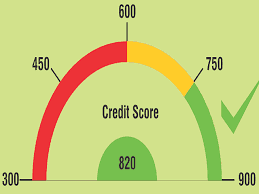
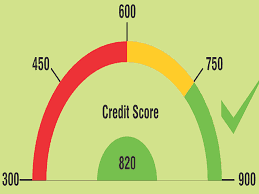
CIBIL scores range from 300 to 900. Here's the breakdown:
|
Range |
Category |
Your Position |
|
300-549 |
Poor |
Below you |
|
550-649 |
Fair |
You are here |
|
650-699 |
Average |
Your first target |
|
700-749 |
Good |
Where doors open |
|
750+ |
Excellent |
Long-term goal |
At 600, you're in the "fair" category. Lenders see you as higher risk. You have credit history, but something in that history raises concerns. Maybe late payments, high credit card usage, or limited positive data.
The good news? You're close enough to "average" that improvement is totally within reach. Most people wondering "is 600 credit score good" already know the answer deep down. It's workable, but there's definitely room for improvement.
Can You Get a Loan with a 600 Credit Score?
Yes, but options are limited and expensive.
What's Available?
NBFCs and Fintech Lenders: More flexible than banks. Some specifically serve borrowers in the 550-650 range, though interest rates are higher. That said, you'll want to push your score up by at least 75 points to access better rates and faster approval.
Secured Loans: Loans backed by collateral (gold, property, fixed deposits) are accessible because the lender has security if you default. Your 600 CIBIL score matters less when you're offering collateral.
Personal Loans with Higher Rates: Some lenders approve at 600 but expect rates in the 22-30% range. Painful, but sometimes necessary. The catch is that many reputable lenders prefer a minimum score of 675-700 for unsecured personal loans.
Co-applicant Route: Adding someone with better credit improves approval odds and may get you better rates. This is honestly one of your best strategies right now.
What's Harder to Get?
Bank Personal Loans: Most banks want 700+ for unsecured personal loans. At 600, you'll face rejection or stringent conditions like requiring a guarantor or larger income proof.
Competitive Interest Rates: The best rates (15-18%) are reserved for scores above 750. At 600, you might be looking at 22-30% if approved. That's a significant difference in EMI payments.
Premium Credit Cards: Basic cards might be possible. Premium rewards cards with good benefits typically require 700+.
Large Loan Amounts: Even if approved, the amount will be limited. Lenders cap exposure to higher-risk borrowers. You might need a loan of ₹5 lakhs but only get approved for ₹2 lakhs.
Understanding Your CIBIL Score Learn everything about how CIBIL scores work, what factors affect them, and how to maintain a healthy credit profile. Read more.
The Cost in Real Terms
₹2 lakh personal loan, 3 years:
- At 600 (24% rate): EMI ₹7,820, Total interest ₹81,520
- At 750 (16% rate): EMI ₹7,050, Total interest ₹53,800
- Extra cost at 600: ₹27,720
You're paying significantly more just because of your credit score. Over three years, that's almost ₹28,000 extra money that could've gone toward building an emergency fund or investing.
Why Is Your 600 CIBIL Score Low?
Understanding the cause helps fix it. Common reasons people end up with a 600 CIBIL score:
Late or Missed Payments
Even one or two late payments significantly impact your score. If you've missed EMIs or paid credit card bills past due dates, this is likely a major factor. I've seen people's scores drop from 720 to 600 just from three consecutive late credit card payments.
Impact: Each 30-day late payment can drop your score 30-50 points. 60+ day delays hurt even more. The scoring algorithm weighs recent payment behaviour heavily.
High Credit Utilisation
Using more than 50% of your available credit limit signals financial stress to scoring algorithms. If you have a ₹1 lakh credit limit and you're regularly using ₹60,000-70,000 of it, that's a problem.
Impact: High utilisation can drag your score down 50-100 points compared to keeping it below 30%. Some people don't realise this factor matters almost as much as payment history.
Settlement or Write-Off History
If you've ever settled a loan for less than owed, or had an account written off, this damages your score severely. Banks report this to CIBIL, and it stays on your record.
Impact: Settlements can drop scores by 100+ points and stay on your report for 7 years. This is one of the hardest things to recover from.
Short Credit History
Only 1-2 years of credit history doesn't give scoring models enough positive data to rate you highly. You might be perfectly responsible, but the algorithm needs time to see that pattern.
Impact: Limited history typically caps scores in the 600-680 range regardless of perfect behaviour.
Too Many Recent Applications
Multiple credit applications in a short period create hard inquiries that lower your score. Each time you apply for a loan or credit card, the lender checks your CIBIL report.
Impact: Each inquiry can drop your score 5-10 points. Multiple inquiries within a month compound. I've seen people apply to 6-7 lenders thinking it increases their chances, but it actually makes approval less likely.
Only Negative Information
If your credit file has only negative information (like a defaulted account) without positive history to balance it, your score suffers. This happens when people take one loan, struggle with it, then avoid credit entirely afterward.
The 600 to 700 Roadmap
This is very achievable. Here's the systematic approach:
Phase 1: Stop the Bleeding (Month 1)
Action 1: Set up autopay for all existing accounts. No more late payments from this point forward. Even if it's just the minimum payment on a credit card, pay something on time.
Action 2: Check your detailed CIBIL report for errors. Dispute anything incorrect immediately. Sometimes your score is low due to mistakes - like a loan account showing as "settled" when it was actually paid in full.
Action 3: If you're over-utilising credit cards, start paying down balances aggressively. If you can't pay them off completely, at least get your utilisation below 50%.
Phase 2: Build Positive History (Months 2-6)
Action 4: If you don't have a credit card, get a secured card against a fixed deposit. Use it for small purchases and pay in full monthly. This is the fastest way to start building positive payment history.
Action 5: Keep credit utilisation below 30%, ideally below 10%. Some people track this weekly - check your credit card balance regularly and make mid-cycle payments if needed.
Action 6: Don't apply for any new credit during this period. Let existing inquiries age out. Each inquiry stays on your report for 2 years but impacts your score most in the first 6 months.
Action 7: Continue perfect payment history. Each month of on-time payments helps. After 6 months of consistent behaviour, you'll see noticeable improvement.
Phase 3: Accelerate Growth (Months 6-12)
Action 8: Consider becoming an authorised user on a family member's well-managed credit card. Their positive history gets added to your report.
Action 9: If you have old accounts in good standing, make sure they remain active (small purchases). Don't let old cards go dormant.
Action 10: After 6 months of improvement, check if credit limit increases are possible on existing cards. Higher limits with the same usage = lower utilisation = better score.
Expected Timeline
|
Milestone |
Typical Timeline |
|
600 → 650 |
3-6 months |
|
650 → 700 |
4-8 months |
|
700 → 750 |
6-12 months |
Total journey from 600 to 750: 12-18 months with consistent effort. I've seen people do it faster when they're aggressive about paying down balances and maintaining perfect payment history.
Immediate Options While Improving Your 600 CIBIL Score
You need credit now? Here are realistic paths:
Secured Credit Card
Apply for a credit card secured against a fixed deposit. You deposit ₹25,000-50,000, and get a card with that limit. Use responsibly to build history. The beauty of secured cards is that approval is almost guaranteed since your FD is collateral.
Available from: Most major banks including SBI, ICICI, HDFC, Axis Bank
Gold Loan
If you have gold jewellery, gold loans are available regardless of credit score. The gold serves as collateral, so your 600 CIBIL score matters less.
Benefits:
- Quick approval (often same day)
- Lower interest rates (12-18%)
- No credit score impact on approval
- Loan-to-value ratios up to 75% of gold value
Loan Against Fixed Deposit
If you have FDs, borrow against them at low rates (usually FD rate + 1-2%). Your score doesn't matter since the FD is collateral. Most banks offer this, and it's one of the cheapest borrowing options available.
Personal Loan from NBFCs
Some NBFCs serve borrowers in the 600-700 score range, though you'll get better terms once you cross 675. Here's where Finnable can help: We offer personal loans from ₹50,000 to ₹10 lakhs with interest rates ranging from 15% to 30.99% based on your complete financial profile.
What makes Finnable different is their holistic evaluation approach. We don't just look at your CIBIL score - we consider your income stability, employer reputation, banking behaviour, and overall financial health. While we typically prefer a minimum CIBIL of 675, we also evaluate first-time borrowers with no credit history.
Finnable Personal Loan Features:
- Loan Amount: ₹50,000 to ₹10 lakhs
- Interest Rate: Starts from 15% p.a. (reducing balance) for high-quality profiles
- Processing Fee: Up to 4%
- Disbursal Time: As fast as 60 minutes after approval
Flexible tenure options
The strategy here? Focus on getting your score from 600 to 675 over the next 3-6 months using the roadmap above. Once you're at 675+, you'll qualify for better rates from NBFCs like Finnable, and your EMI burden will be significantly lower.
Co-applicant Strategy
Apply with someone who has a stronger credit profile (spouse, parent, sibling). Their score improves approval odds, and you both build credit history from the loan. This is particularly effective for personal loans and car loans.
Mistakes to Avoid at 600
Don't make things worse while trying to improve:
Don't Apply Everywhere
Each application creates a hard inquiry. Multiple rejections hurt your score further. Apply strategically to lenders likely to approve you. Research eligibility criteria before applying.
Don't Close Old Accounts
Even if you're not using an old card, keeping it open helps your average account age and total available credit. Closing accounts can actually hurt your score by reducing your credit history length.
Don't Settle Outstanding Accounts
If possible, pay in full rather than settling. Settlements appear on your report as "settled" rather than "paid," which hurts your score. Lenders see "settled" and think "couldn't pay the full amount."
Don't Ignore Small Dues
Even small outstanding amounts (like ₹500 unpaid credit card balance) affect your score. Clear everything. Some people think small amounts don't matter, but CIBIL doesn't distinguish between ₹500 and ₹50,000 in unpaid debt.
Don't Pay for "Credit Repair" Services
Companies promising quick score fixes are usually scams. There's no shortcut. Legitimate improvement requires time and changed behaviour. If someone promises to "increase your score by 200 points in 30 days," run the other way.
Ready to Move Forward?
If you're working on improving your credit score and need financing in the meantime, explore your options with Finnable. Their holistic evaluation approach considers more than just your CIBIL score.
About the Author

A 600 CIBIL score falls in the "fair" category in India - below average but not the worst. You'll face limited loan options and higher interest rates. Banks typically prefer 700+ for unsecured lending. The good news is that 600 is fixable within 6-12 months with consistent effort.
Getting a personal loan with a 600 credit score is challenging but not impossible. Some NBFCs approve at 600 with higher interest rates (22-30%), though most reputable lenders prefer a minimum of 675. Banks are unlikely to approve unsecured personal loans at this score. Your best options are secured loans, co-applicant applications, or waiting 3-6 months while you improve your score to 675+.
With consistent effort (on-time payments, low utilisation, no new applications), most people reach 700 within 6-12 months. The timeline depends on why your score is at 600 and how aggressively you address those factors. If your score is low due to high utilisation, you can see improvement in 3-4 months. If it's due to past defaults, expect 12-18 months.
Expect personal loan rates around 22-30% if approved at a 600 CIBIL score. Secured loans (gold, property, FD-backed) offer lower rates (12-18%) regardless of score because collateral reduces lender risk. The difference in rates between 600 and 750 can be 10-12%, which translates to thousands of rupees in extra interest over the loan tenure.
No. You need credit activity to build positive history. The key is responsible usage: get a secured card, use it for small purchases, pay in full monthly. Avoiding credit entirely won't improve your score - CIBIL needs to see that you can manage credit responsibly. Think of it like learning to swim - you can't learn by staying out of the water.
Is 600 Credit Score Good or Bad?
Can You Get a Loan with a 600 Credit Score?
Why Is Your 600 CIBIL Score Low?
The 600 to 700 Roadmap
Immediate Options While Improving Your 600 CIBIL Score
Mistakes to Avoid at 600
Ready to Move Forward?


