
What is GSTIN? Full Form, Format & Registration Process - Everything You Need to Know

Loan in
60 Minutes
The full form of GSTIN is Goods and Services Tax Identification Number, which is a 15-digit alphanumeric identifier assigned by the government in India to businesses that have successfully completed the GST registration process on the GST portal. This number identifies a business, tracks all goods and services tax-related transactions, files returns, and issues a tax invoice.
Quick Reads
-
GSTIN is a unique number that identifies a business or taxpayer registered under GST.
-
A GSTIN has 15 characters, and each part of the number carries specific information.
-
If your business needs GST registration, you can apply for it online through the GST portal.
-
Your GSTIN is used for important tasks such as issuing invoices, filing returns, and claiming eligible input tax credit.
-
Checking a GSTIN can help you verify a supplier's registration details before making a business transaction.
If you are running or aspiring to run a business, you will eventually hear the term GSTIN. This number will be present on your invoices, GST returns, etc. But what exactly is GST, and what does it signify?
Having a good grasp of what is GSTIN full form, its format, and the GSTIN registration process can ease GST compliance.
What is GSTIN and What is its Format?
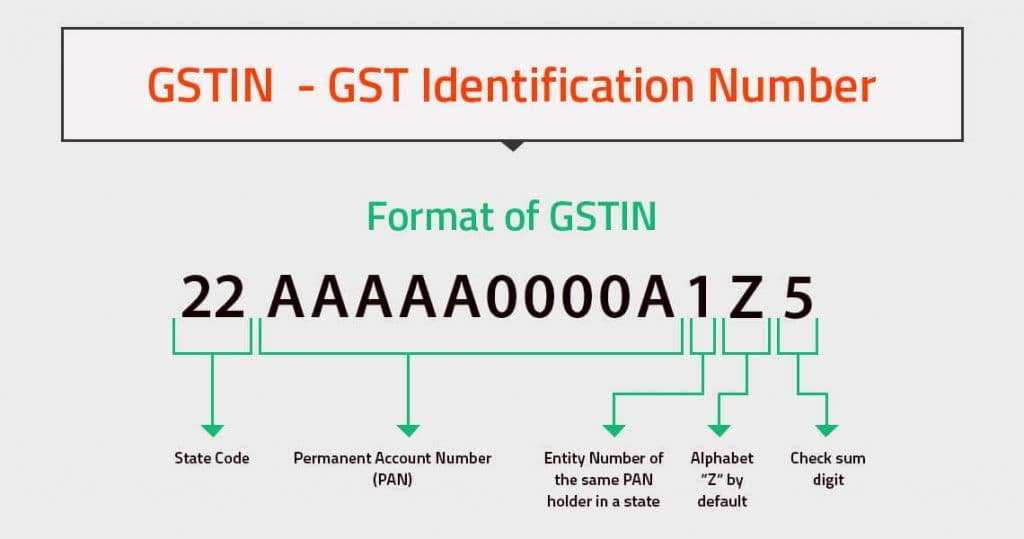
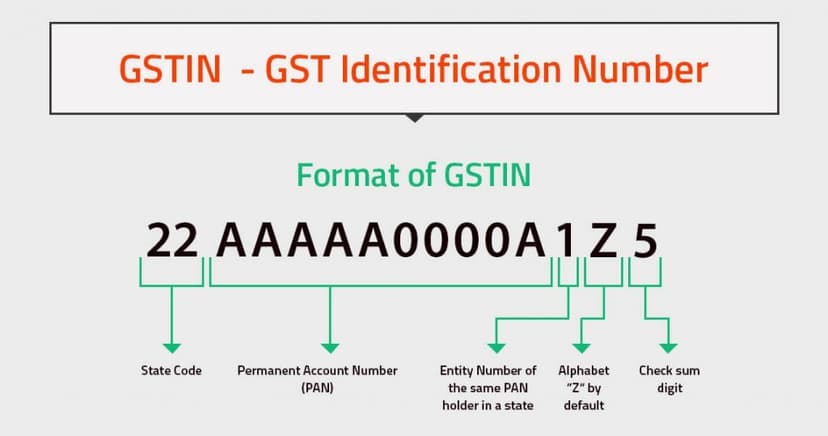
Every taxpayer who has a valid GST registration gets their own 15-digit GSTIN, which is used to identify them in the GST system. The GSTIN is used to identify the taxpayer for activities such as generating GST invoices, filing returns, and tracking GST transactions.
So if we try to explain the structure or format of GSTIN in a simple way, it can be described as:
|
Characters |
What they represent |
|
First 2 digits |
State or Union Territory code |
|
Next 10 characters |
PAN no. of the taxpayer |
|
13th character |
Number of registrations linked to the same PAN in that state or UT |
|
14th character |
Usually a default character, generally “Z” |
|
15th character |
Checksum character used for validation |
For example, a GSTIN can be: 27ABCDE1234F1Z5. The GSTIN identifies a specific taxpayer through his/her PAN and shows the state/Union Territory (UT) of registration. Therefore, if a business operates in more than one state/UT, it would require a unique GSTIN for each of those.
Also understand that GSTIN and GSTN are not the same; where GSTIN represents the registered taxpayer, GSTN (Goods and Services Tax Network) is the technology infrastructure for GST.
What Does a GSTIN Actually Do for Your Business?
For a registered business owner, the GSTIN is a critical part of the business's tax history. Every standard GST proceeding uses a GSTIN.
Here are some of the key reasons it matters:
-
GST Invoices: If you're a registered supplier, your GSTIN needs to appear on applicable tax invoices.
-
GST Returns: Your GSTIN identifies you when you file returns and submit other GST-related information.
-
Input Tax Credit: It helps link eligible input tax credit to the relevant supplier and recipient.
-
Business Transactions: Customers and other businesses can use a GSTIN to check the registration details of a supplier.
-
Tax Compliance: It links your GST transactions to your registration, making compliance easier to track.
Who is Required to Register Under GST?
It is important to note that not all businesses are required to register for GST. Registration is necessitated if you cross the turnover limit, or if your nature of business or type of supply requires it.
However, the relevant turnover threshold could differ based on the kind of supply. Besides this, the threshold can vary between different states or UTs. Additionally, registration is sometimes compulsory even when the standard turnover threshold is not breached. Examples of such circumstances are when people covered by the mandatory registration provision under Section 24 of the CGST Act need to get registered irrespective of their turnover.
Before making registration decisions, businesses must check their circumstances carefully against the provisions and latest announcements to confirm their registration obligations.
What Documents Should Be Kept Before Applying for GST?
Which documents you require depends upon how your business is structured and your situation. The typical business documents/information that should be kept ready by you are:
-
PAN details
-
Current contact details (mobile number and email)
-
Valid proof of the address where your business primarily operates
-
Details of the business constitution
-
Bank account details, where applicable
-
Details of promoters, partners or authorized signatories
-
Aadhaar-related information where authentication applies
How Do I Apply for GST and Get GSTIN?
The GSTIN registration process starts with an online application on the portal. Keep your details and supporting documents ready, then follow the steps below:
Step 1: Open the Official GST Website
Go to the GST portal and select Services > Registration > New Registration to begin your application.
Step 2: Enter Basic Details
PAN is mandatory for normal GST registration. Choose the correct type of taxpayer and provide information like state/UT, legal name, PAN, e-mail ID, and mobile number.
Normal GST registration requires a mandatory PAN number.
Step 3: Verify Your Details
Once you enter your details, check your phone and inbox for the two OTPs sent for verification. After verification is done, the system will display a Temporary Reference Number (TRN).
Step 4: Complete the Application
Log in to the application with your TRN and enter any other information you might need to provide, such as:
-
Business and promoter/partner details
-
Details of your main and other business locations
-
Goods and services supplied
-
Authorized signatory details
-
Bank and other required information
Upload the applicable supporting documents along the way.
Step 5: Complete Authentication and Submit
Aadhaar authentication may be required depending on the taxpayer and the relevant regulations. The GST portal mentions that regular and composition taxpayers have to do Aadhaar authentication for first-time GST registration as per applicable process and conditions.
Then, the application is signed and submitted using the method selected from DSC, e-signature, or EVC.
Step 6: Receive Your GSTIN
Once the GST application is verified and accepted, the GSTIN will be provided to the registered taxpayer. A GST Registration Certificate is provided by way of Form GST REG-06, which can be downloaded from the portal itself. Also, note that no hard copy is provided by the government.
Conclusion
From issuing invoices and filing returns to keeping track of tax-related transactions, GSTIN plays an important role in running a compliant business. Understanding the GSTIN full form, GSTIN format, and GSTIN registration process can make compliance a lot less confusing.
Keeping your GST registration and financial records in order can also be useful when you need business financing, as lenders may ask for GST returns and other documents while assessing an application. At Finnable, we understand that financial needs can come up at different stages, which is why we keep our personal loan application process simple and online. If you're eligible, you can borrow up to ₹10 lakh through a personal loan, with the final amount depending on the terms.
About the Author

If you come across the term GSTIN, it simply means Goods and Services Tax Identification Number. This number is a unique number that a taxpayer would be allotted under the GST.
Yes, GSTIN and GST registration number are used interchangeably to refer to the number allotted to a taxpayer after applying for GST registration.
Yes. A business can obtain more than one GST registration under different state(s) / Union territory(ies) or in the same state. Each GST registration will have its separate GSTIN associated with it.
GST Registration process is initiated online via the official GST portal. The application starts under Services, then Registration, and then the New Registration section.
What is GSTIN and What is its Format?
What Does a GSTIN Actually Do for Your Business?
Who is Required to Register Under GST?
What Documents Should Be Kept Before Applying for GST?
How Do I Apply for GST and Get GSTIN?
Conclusion


