How Different Types of Working Capital Impact Business Stability

Loan in
60 Minutes
Working capital enables a firm to meet its short-term liabilities and keep daily operations running smoothly. Different kinds of working capital are required in different amounts, depending on the nature of a company's expenses and cash flows. When funds fall short, everyday expenses can become difficult to handle, while keeping more money than necessary may leave it sitting unused or tied up. Monitoring cash, inventory, and receivables allows the company to get the most out of its funds and maintain a healthy level of working capital.
Quick Reads
-
Working capital requirements can change based on a business's size, nature, and operating cycle.
-
Permanent and regular working capital support the expenses a business deals with as part of its normal operations.
-
Temporary and seasonal working capital funds become important when business activity or expenses increase for a limited period.
-
Insufficient funds can adversely impact suppliers, purchases of inventory, and the capacity to meet unforeseen expenses.
-
Keeping working capital under regular review can help a business avoid both cash shortages and unnecessary funds being tied up.
Every business needs money available at the right time to keep its daily activities going. The company has to pay off its debts, buy inventory, meet salary payments, and pay other recurring expenses. This is where working capital becomes important. But the amount a business needs is not always the same, and different situations may call for different types of working capital. Understanding different kinds of working capital and how they affect cash flow can help explain why some businesses handle financial ups and downs more comfortably than others.
What Is Working Capital?
Running a business involves managing several expenses. Working capital is the amount available to handle the short-term needs, such as buying stock, paying staff, or settling supplier bills. In simple terms, it shows how much is left to support the business’s short-term needs after accounting for the payments it is yet to receive.
Working Capital = Current Assets − Current Liabilities
Current assets may include cash, inventory, and payments due from customers. Current liabilities, on the other hand, include short-term dues such as supplier payments, salaries, and other business expenses.
How Does Working Capital Help Keep a Business Running Smoothly?
Cash does not always come into the business at the same time that expenses need to be paid. For example, a business may have sales coming in, but still need money today to pay a supplier or cover its monthly expenses. Sufficient working capital helps to bridge this gap and keeps the business functioning without unnecessary interruptions.
-
Pay suppliers and employees on time
-
Handle everyday expenses
-
Deal with cash flow gaps
-
Keep daily operations moving
What Types of Working Capital Does a Business Need?
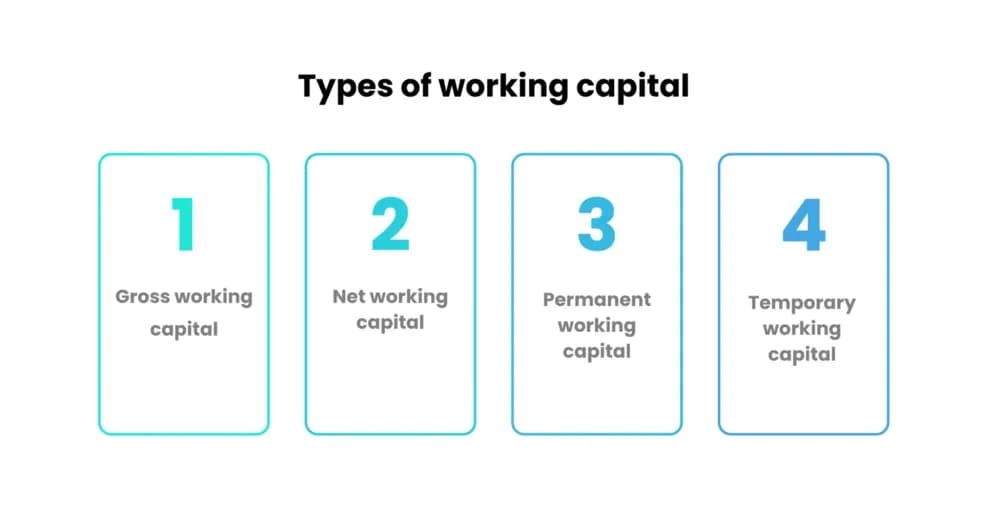
The amount a business needs changes depending on its regular operations, seasonal demand, growth, and short-term funding needs. That is the main reason why working capital is divided into different types based on how long it is needed, why it is needed, and what it represents. Let us explain the types of working capital:
Permanent Working Capital
-
A business needs some level of working capital throughout the year, even when sales or demand are relatively normal. This is known as permanent working capital.
-
This level of working capital is required for the business to continue its normal day-to-day business without getting disrupted because of normal cash shortages.
Temporary Working Capital
-
Temporary working capital, also known as variable or fluctuating working capital, refers to the additional funding a business may need for a short period when the usual requirements increase. This could be due to a large order, a sudden rise in sales, or the need to hold additional inventory.
-
Access to extra working capital can help a business handle a sudden and temporary increase in demand without putting pressure on the regular cash flow.
Gross Working Capital
-
This refers to the total amount a business has tied up in current assets, including cash, inventory, and payments it expects to receive from customers.
-
Having enough current assets gives a business resources it can use for its short-term needs. However, if too much money is tied up in inventory or receivables, it may leave less cash available for immediate expenses.
Net Working Capital
-
It shows the amount left after a business’s short-term liabilities are deducted from its current assets.
-
Positive net working capital generally gives a business more room to meet its short-term obligations, while negative net working capital may signal more pressure to manage upcoming payments.
Regular Working Capital
-
It is the amount needed for normal operations of a business. It helps pay for costs that are part of regular business activities, not special or seasonal needs.
-
Keeping enough funds aside for regular and predictable expenses helps business management.
Seasonal Working Capital
-
Seasonal working capital is the additional money a business may need at times when the demand or expenses are higher than usual. Festive sales, holiday periods, and agricultural cycles are common examples.
-
By anticipating seasonal needs, a company may manage increased costs when necessary and build inventories without needlessly straining its resources during busy times.
What Can Happen When a Business Runs Short of Working Capital?
If working capital is limited, it could get difficult for a business to keep up with regular expenses. It could put pressure on day-to-day operations, including:
-
Paying suppliers and employees can become difficult
-
Bills may start piling up
-
Restocking may become harder
-
Short-term borrowing may increase
-
Unexpected expenses can become harder to handle
What Determines a Business’s Working Capital Needs?
The requirements may change based on how the business operates, how quickly money moves through it, and what its funding needs look like.
-
Nature of the business
-
Business size
-
Operating cycle
-
Seasonal demand
-
Credit terms offered to customers
-
Growth rate
Conclusion
Working capital helps in keeping everyday business moving. It allows a business to meet its regular expenses, manage changes in demand, among others. Too little working capital can make it difficult to meet the obligations of the firm. On the other hand, excessive investment leaves cash idle that could have been put to productive use. By keeping a close eye on cash flow, stock, receivables, and upcoming payments, a business can utilize its money resourcefully. Finnable provides personal loan that can help businesses get funds for short-term requirements.
About the Author

Working capital can be classified as permanent, temporary, gross, net, regular or seasonal, depending on the business’s needs and when the funds are required.
Gross working capital refers to the total current assets a business has, while net working capital shows what remains after its current liabilities are deducted.
A business may have funds locked in unsold stock or pending customer payments. So, even with enough working capital on paper, it may not have enough cash available for immediate expenses.
Yes. Higher sales, larger inventory needs, and increased operating expenses can all raise the amount of working capital a growing business requires.
What Is Working Capital?
How Does Working Capital Help Keep a Business Running Smoothly?
What Types of Working Capital Does a Business Need?
What Can Happen When a Business Runs Short of Working Capital?
What Determines a Business’s Working Capital Needs?
Conclusion