
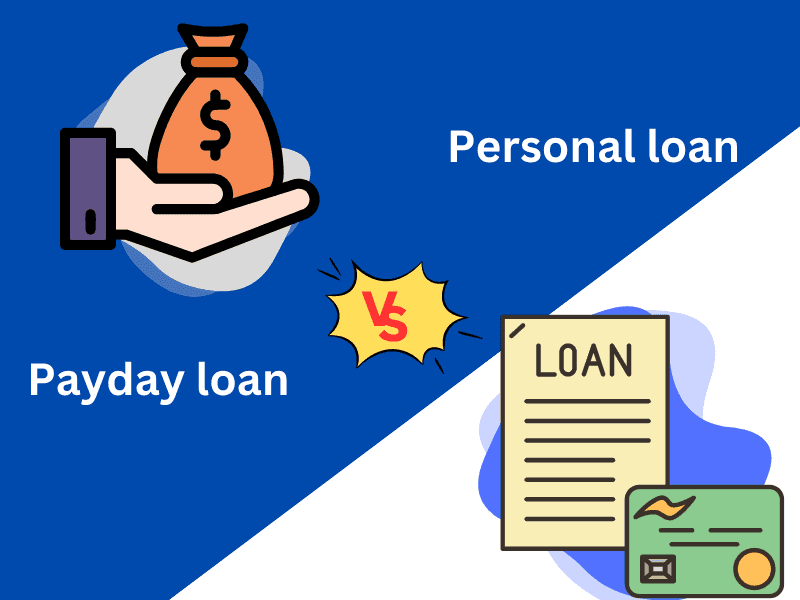
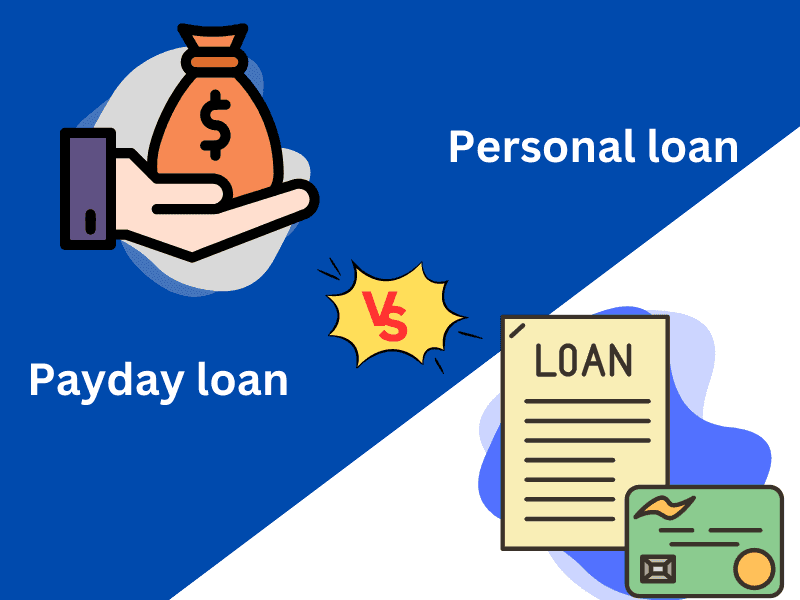
Payday Loan vs Personal Loan: Same Problem, Very Different Solutions

Loan in
60 Minutes
Money runs out before the month does. It happens. The car breaks down, a medical bill shows up, rent is due and the salary hasn't hit yet. Two options usually come up: a payday loan or a personal loan.
By now, we know what is a personal loan- but what is payday loan? Let’s take a closer look.
Payday loan and personal loan- both put cash in hand. But that's where the similarity ends. One is designed to be repaid in days. The other spreads over months or years. One costs a fortune in fees. The other charges reasonable interest. Choosing wrong can turn a temporary cash crunch into a long-term financial problem.
What's a Payday Loan?
Let’s explore payday loan meaning.
A payday loan is a small, short-term loan meant to cover expenses until the next paycheck arrives. Borrow ₹5,000-₹50,000, repay it (plus fees) when salary comes in—usually within 7-30 days.
The appeal is obvious: fast approval, minimal documentation and no credit check in most cases. Someone with terrible credit or no credit history can still get approved. Money often hits the account within hours.
How payday loans work:
-
Apply online or at a storefront lender
-
Provide proof of income (salary slip, bank statement)
-
Get approved—often within minutes
-
Receive funds the same day or the next day
-
Repay the full amount plus fees on the next payday
The catch? Fees are steep. A typical payday lender might charge ₹300-500 per ₹10,000 borrowed for a two-week period. Sounds manageable until you calculate the annualised rate—often 300-400% or higher.
Common payday loan uses:
-
Covering rent or utility bills before payday
-
Emergency car or bike repairs
-
Medical expenses that can't wait
-
Avoiding overdraft fees or bounced checks
What's a Personal Loan?
A personal loan is an unsecured loan from a bank, NBFC, or fintech lender. Borrow ₹50,000 to ₹25 lakh (sometimes more), repay through monthly EMIs over 12-60 months.
Unlike payday loans, personal loans involve credit checks and income verification. Better credit scores mean better interest rates. The process takes longer—a few hours to a few days—but the cost is dramatically lower.
How personal loans work:
-
Apply through a bank, NBFC, or app
-
Submit documents (ID, income proof, bank statements)
-
The lender checks the credit score and repayment capacity
-
Receive approval with interest rate and terms
-
Funds disbursed to the bank account
-
Repay through fixed monthly EMIs
Interest rates: 10-24% annually, depending on credit profile and lender. Compare that to payday loan fees that translate to 300%+ annually.
Common personal loan uses:
-
Medical emergencies
-
Home renovation
-
Wedding expenses
-
Debt consolidation
-
Large purchases (appliances, electronics)
-
Travel or education
Payday Loan Vs Personal Loan: The Real Differences
Here's where it gets real:
|
Factor |
Payday Loan |
Personal Loan |
|
Loan amount |
₹5,000-50,000 |
₹50,000-25 lakh |
|
Repayment period |
7-30 days |
12-60 months |
|
Cost (APR equivalent) |
300-500%+ |
10-24% |
|
Credit check |
Usually none |
Required |
|
Approval time |
Minutes to hours |
Hours to days |
|
Documentation |
Minimal |
Moderate |
|
Credit score impact |
Often unreported |
Builds credit history |
When Payday Loans Might Make Sense
Honestly? Almost never. But there are narrow scenarios:
Genuine emergency with no alternatives. Medical crisis, eviction notice, car needed for work—and credit score too damaged for any other option.
Certain repayment. Salary is confirmed for next week. The shortfall is temporary and specific. Repaying on time is guaranteed, not hoped for.
Cheaper than the alternative. Sometimes bouncing a rent check cost more in fees and credit damage than a payday loan. Sometimes. Calculate both before deciding.
When Personal Loans Are Better
For most situations requiring borrowed money, personal loans win:
Larger expenses. Anything above ₹30,000-50,000 makes no sense as a payday loan. The fees would be crushing.
Repayment needs time. If paying back in 30 days isn't realistic, personal loans spread the burden across months.
Building credit matters. Personal loans report to credit bureaus. Timely repayment improves CIBIL scores. Payday loans often don't report—no credit benefit from repaying.
Rate sensitivity. When you qualify for 12-15% personal loan rates, paying 300%+ for a payday loan is financially irrational.
Consolidating existing debt. Using a personal loan to pay off high-interest credit cards or multiple small debts saves money. Using payday loans for this purpose makes things worse.
The Debt Trap Problem
Payday lenders profit from repeat borrowers. The business model depends on people who can't fully repay, roll over loans, and keep paying fees.
Statistics from countries where payday lending is common show that most borrowers take multiple loans per year. Many end up paying more in fees than they originally borrowed. Some never escape the cycle.
Conclusion
Payday loans exist for a reason—but that reason should be genuine emergencies when nothing else works. The fees are brutal, the debt cycle is real, and most people regret going that route.
Personal loans cost less, build credit, and give breathing room to repay. They're harder to get, sure. But that's usually a feature, not a bug.
And sometimes the best loan is no loan at all. Negotiate payment plans, ask family, check employer advances, explore government schemes. Borrowing should be the backup option, not the default.
Looking for affordable personal loan options? Finnable helps borrowers compare rates and find financing that fits their situation—because the right loan at the right cost matters for long-term financial health.
About the Author

Usually, yes—that's their main appeal. But the cost is high precisely because lenders take on risky borrowers.
Payday loans: often the same day. Personal loans: A few hours to 2-3 days, depending on the lender and documentation.
Most payday lenders don't report to credit bureaus. Your score won't improve from repaying—but defaulting can still cause problems if sent to collections.
Rarely. Only when the alternative is worse (eviction, job loss, medical emergency) and repayment is certain. For most situations, personal loans or alternatives work better.
Varies by lender. 700+ gets good rates at most banks. 650-700 may qualify with NBFCs at higher rates. Below 650 gets difficult but not impossible.
What's a Payday Loan?
What's a Personal Loan?
Payday Loan Vs Personal Loan: The Real Differences
When Payday Loans Might Make Sense
When Personal Loans Are Better
The Debt Trap Problem
Conclusion