How to Write a Cancelled Cheque: A Complete Guide for Bank Verification and Loans

Loan in
60 Minutes
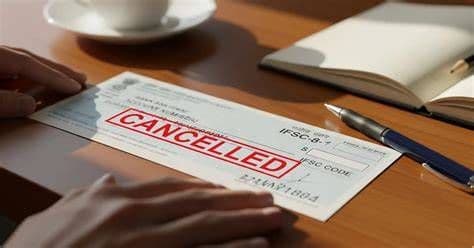
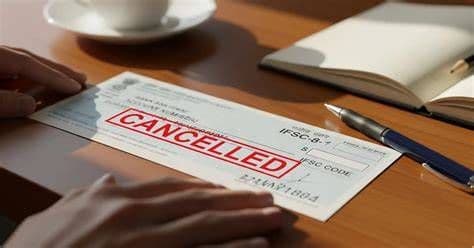
Knowing how to write a canceled cheque is useful when a bank, lender, employer, or financial service provider asks you to verify your bank account details. Take a blank cheque, draw 2 parallel lines on it, and clearly write “Canceled” between those lines. Do not sign it or fill in the payee and amount fields unless the requesting institution specifically asks you to.
Quick Read
-
A canceled cheque can confirm bank account details, such as the account number, IFSC code, and MICR code.
-
To cancel a cheque, you should draw two parallel lines across a cheque that has not been used and write 'Canceled' between the lines.
-
Omit the name of the payee, the amount, and the date, and don't sign the document unless you are explicitly instructed to do so.
-
A canceled check is required when applying for a loan, for bank verification, and for other financial transactions.
You may be asked to provide a canceled cheque when applying for a loan or getting bank verification done. A canceled cheque is a common requirement for confirming bank account details during loan applications and similar financial transactions. Since it cannot be used for payments after cancellation, it is frequently used to provide proof of account information. Learning to prepare one is straightforward: simply cancel an unused cheque with zero to minimal additional information.
What Is a Canceled Cheque?
A canceled cheque is essentially an unused cheque that has been officially rendered invalid for payment. While it can no longer be used for transactions, the account and banking details printed on it, such as the account holder's name, bank branch name, account number, IFSC code, and MICR code, are of value for verification purposes. These details are readily visible on the cheque, making it a convenient method for confirming the information provided in financial contexts.
How to Write a Canceled Cheque?
To create a canceled cheque, mark an unused cheque in a way that clearly indicates it is not intended for payment. There’s no need to fill it out with typical payment information. Follow these simple steps:
Draw two parallel lines
Take an unused cheque leaf and draw 2 adjacent lines. Make sure the lines don't cover the key banking and account information printed on the cheque.
Write "Canceled"
Write the word "Canceled" between the two parallel lines so that it is clearly visible. This signifies that the cheque is for verification purposes only, not a monetary transaction.
Leave payment fields blank
Do not fill in the name of the payee, the amount, or the date. These fields are unnecessary for a canceled cheque.
Do not sign the cheque
A canceled cheque does not require a signature. However, always follow any specific instructions given to you by the requesting organization.
What Information Should Remain Visible?
The purpose of a canceled cheque is to verify your banking details, so ensure that the information printed on the cheque remains clear and legible after you mark it as canceled. This typically includes:
-
Account holder's name
-
Bank and branch name
-
A/C number
-
IFSC code
-
MICR code
-
Cheque number
Why Do Banks and Lenders Need a Canceled Cheque?
A canceled cheque allows institutions to confirm the bank account details submitted by an applicant, reducing the likelihood of errors in their systems. Here are the most common reasons why it's needed:
For loan applications
When you apply for a loan, a lender may ask for a canceled cheque to verify the bank account for loan disbursement or for setting up repayment. Required documents can vary by loan product and lender.
For bank account verification
Many organizations request a canceled cheque to confirm a customer's bank account information. Since all the necessary banking details are printed on the cheque, it simplifies the verification process.
For financial transactions
Canceled cheques may be required by various financial service providers, such as investment platforms, employers for payroll, and insurers for settlements or policy-related payments, to link bank accounts or establish repayment instructions.
How to Make a Canceled Cheque Safely?
Knowing how to cancel a cheque is crucial, but so is handling it responsibly because it contains sensitive information. Take these precautions:
Share it only when necessary
Only provide a canceled cheque to a legitimate organization for a specific, explained reason. Avoid sharing your bank account details in response to a vague request.
Verify the recipient
Before submitting the cheque, confirm it goes to the correct bank, lender, or company. If sending online, use the official secure channel provided by the organization.
Keep a record
Retain a record of when you issued a canceled cheque, to whom it was submitted, and for what purpose. This helps maintain your personal financial records.
What mistakes to Avoid When Canceling a Cheque?
To ensure your canceled cheque serves its purpose without compromising your security, be aware of these common errors:
Do not sign it unnecessarily
Never sign a canceled cheque unless the requesting party explicitly instructs you to do so. It is not required and adds an unnecessary security risk.
Do not enter payment details
Refrain from filling in the date, amount, or payee's name. A canceled cheque is intended for information purposes, not for transactions.
Do not hide the printed details
Make sure that the account number, IFSC code, MICR code, and other important banking details remain clearly visible. The cancellation markings should not obscure them.
Can You Use a Canceled Cheque for Payments?
A canceled cheque is not valid for making payments and should not be treated as such. The cancellation marking clearly indicates its purpose. However, because it contains your banking information, share it only with trusted sources.
Is a Canceled Cheque Required for a Personal Loan?
Yes, lenders request a canceled cheque to process your personal loan application. It is used to confirm your bank details for loan disbursal and to set up the loan repayment structure, depending on the lender’s verification procedures and your bank statement. Always clarify the exact type of proof needed (e.g., a physical cheque, an image, or alternative documentation) with your bank or lender.
Conclusion
To make a canceled cheque, take a blank page from your cheque book and draw two perpendicular lines on it: one above the canceled heading and one directly below it. Below it, do not use the payee field or fill out an amount or date unless instructed by the requesting party. Sign your canceled cheque only if required.
All the printed information regarding the bank should remain printed on the cheque. Finnable's resources can help borrowers understand basic banking and loan requirements before submitting loan applications. Use extreme caution when someone asks you to share a canceled cheque; share it only through secure channels.
About the Author

An unused cheque leaf is selected from the chequebook. It should have "Canceled" written across it in bold characters, surrounded by two parallel lines above it and below it, in such a manner that the horizontal lines of the page lie above and below it. Do not enter details like payee, amount, and date; also ensure that bank-related data continues to be displayed clearly on the cheque.
Yes, you can cancel (stop payment on) a signed cheque without giving any reason. The borrower typically doesn't need to authorize such cheques unless a specific entity requires it.
Typically, the cheque doesn't require a signature; however, it's acceptable as long as you submit it per the requesting agency's specific instructions.
A canceled cheque (one marked "CANCELLED" but not signed for payment) serves as proof of your bank account details, such as account number, IFSC code, and account holder's name for loan verification.
Write "CANCELLED" across a blank, unsigned cheque leaf, scan it clearly using a scanner app or scanner (make sure the account number, IFSC, and name are visible), save it as a PDF/JPG, then attach it to your email with a short note explaining it's for account verification.
What Is a Canceled Cheque?
How to Write a Canceled Cheque?
What Information Should Remain Visible?
Why Do Banks and Lenders Need a Canceled Cheque?
How to Make a Canceled Cheque Safely?
What mistakes to Avoid When Canceling a Cheque?
Can You Use a Canceled Cheque for Payments?
Is a Canceled Cheque Required for a Personal Loan?
Conclusion