
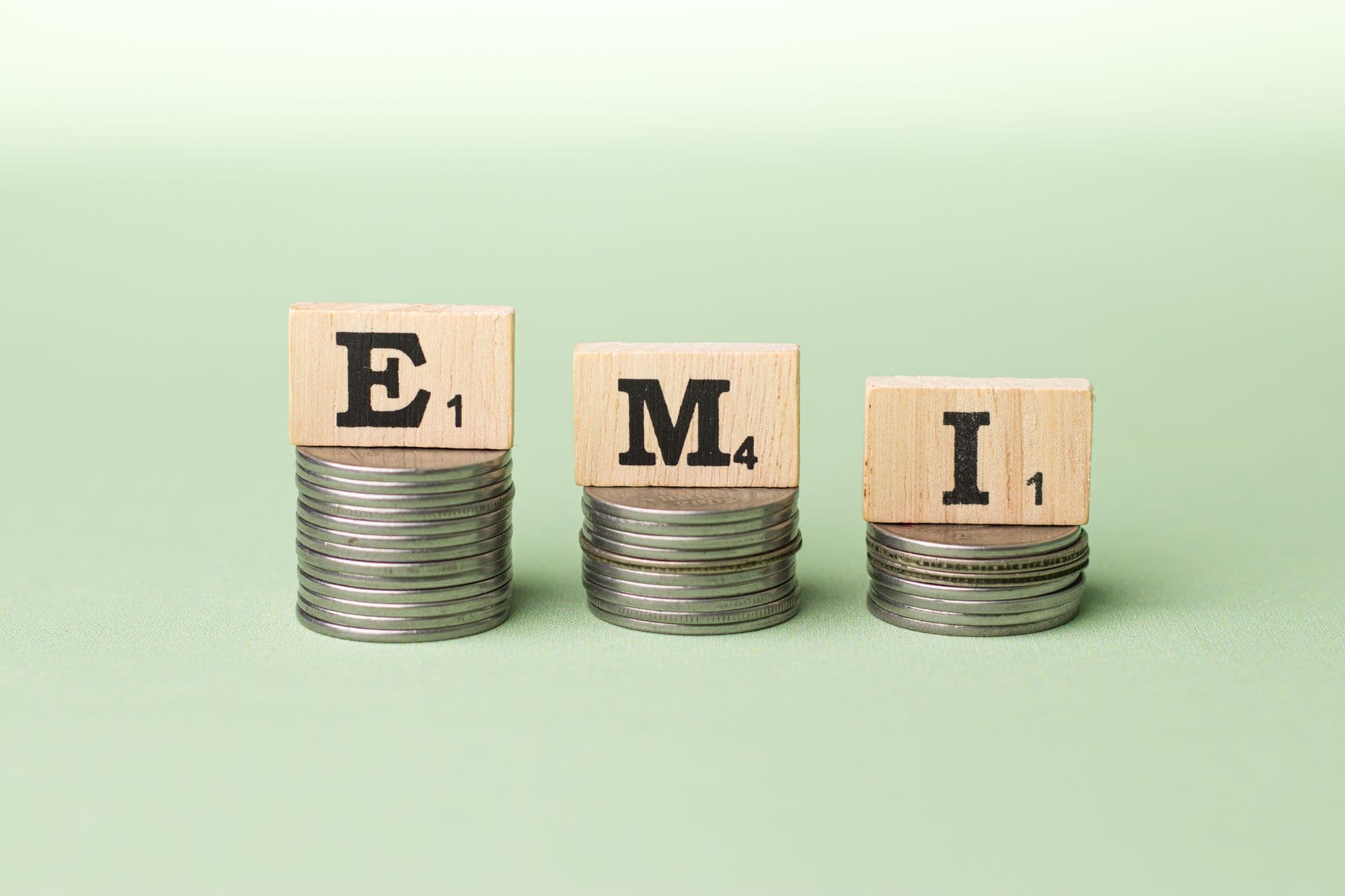
EMI Bounce Charges: Understanding Penalties for Failed Payments

Loan in
60 Minutes
Introduction
If you’ve ever missed an EMI payment, you’re likely aware of the consequences that follow. EMI bounce charges are penalties imposed when a scheduled payment fails due to insufficient funds. These charges can result in additional costs and affect your credit score. Therefore, you should understand what EMI bounce charges are, how they impact your finances, and how to avoid them in the future.
What Are EMI Bounce Charges?
EMI bounce charges are penalties applied when a scheduled loan payment fails due to insufficient funds or a technical issue during auto-debit. The charge structure involves multiple components: a lender penalty of ₹500 to ₹1,500 depending on loan type and lender policy; a bank fee of ₹350 to ₹750 for NACH or ECS return; and 18% GST applied to the lender's charge.
Lenders apply these penalties for two reasons. One is to recover the operational cost of processing failed transactions, sending system alerts, and managing manual follow-ups. The other is to reinforce payment discipline. The charge applies regardless of the reason for the failure. Salary delayed by two days, confusion over the due date, or a simple oversight in transferring funds all result in the same penalty. The system does not distinguish intent from outcome.
What Happens If EMI Bounces: Immediate Consequences
On the day of the bounce, the transaction fails, the bank records a returned item, and the lender's system flags the account. Automated SMS or email notification typically follows within hours.
In the first seven days, the lender may attempt re-presentation of the EMI, usually three to five days after the initial failure. If the re-presentation succeeds because funds are now available, only the original bounce charges apply. If it fails, additional charges apply for the second attempt, and the account moves into a follow-up category. Recovery team contact begins.
If the EMI remains unpaid beyond 30 days, CIBIL reporting triggers. The delay is marked as Days Past Due (DPD-30), and the credit score drops 50 to 100 points. Understanding how CIBIL score for personal loan applications is evaluated helps clarify why even a single unresolved bounce can affect future borrowing terms significantly.
Three consecutive unpaid EMIs or 90 or more days of non-payment typically results in NPA (Non-Performing Asset) classification, at which point recovery action escalates substantially.
Loan EMI Bounce Charges Across Different Lenders
Charge levels vary by lender type. Public sector banks such as SBI, PNB, and BOB typically charge ₹500 to ₹750 per bounce, at the lower end of the range. Private banks such as HDFC, ICICI, and Axis charge ₹500 to ₹1,000. NBFCs operate across a wider band, with loan EMI bounce charges from ₹500 to ₹1,500 depending on loan type and internal policy. Finnable's applicable fee is specified in the loan agreement provided at disbursement. Microfinance institutions may charge ₹200 to ₹500 given the smaller loan sizes involved, though the penalty as a percentage of the EMI can be relatively high.
These lender charges apply over and above the bank's own NACH return fee. Total cost per bounce is therefore: lender charge plus bank charge plus GST. Always check the Most Important Terms and Conditions section of the loan agreement for the exact amount applicable.
For a wider comparison of loan EMI bounce charges across lender categories and what determines the final penalty, the detailed guide covers the subject fully.
EMI Bounce Penalty Impact on CIBIL Score
A single bounce cleared within 30 days typically carries no CIBIL impact. Lenders report delays only after 30 days, so prompt resolution protects the credit record. If the bounce remains unresolved beyond 30 days, the DPD-30 mark appears and the score drops 50 to 100 points.
Multiple bounces across consecutive months establish a pattern of unreliability. Future loan applications face rejection or approval only at materially higher interest rates. Simultaneous bounces across multiple loans signal a systemic cash flow problem, and recovery from such damage typically requires two to three years of consistent on-time payments.
The EMI bounce penalty through CIBIL impact costs far more than the immediate ₹1,000 to ₹2,000 in fees. A 50-point drop can increase the interest rate on a future ₹5 lakh loan for 3 years by 2% to 4%, adding ₹15,000 to ₹30,000 in total interest paid. What constitutes a good CIBIL score and how payment history influences it is worth understanding before any bounce goes unresolved. Borrowers can also check their credit score for free to monitor the impact after an incident.
How to Avoid EMI Bounce Situations
Maintain a buffer balance. Keep at least one extra EMI amount in the auto-debit account at all times. If the EMI is ₹15,000, maintain a minimum of ₹30,000 in that account. This covers timing mismatches between salary credit and EMI debit.
Align the EMI date with salary credit. If salary arrives on the 1st of the month, setting the EMI date for the 5th or 7th provides a built-in buffer. Most lenders allow date selection during loan processing.
Use a dedicated EMI account. A separate savings account used only for loan repayments, funded immediately after salary credit, reduces the risk of inadvertently spending money allocated for EMI. Enable low-balance alerts from the bank so warnings arrive before the auto-debit attempt. Paying EMI online through the lender's platform also provides direct payment confirmation and a record to reference in case of disputes.
For borrowers with surplus funds, paying EMI in advance is another way to ensure continuity during months when salary timing or cash flow may be unpredictable. Advance payment builds a buffer within the loan account itself.
What to Do If EMI Bounces
Transfer funds immediately to cover both the EMI and the expected bounce charges. The lender will likely attempt re-presentation within three to five days. Having funds available ensures the second attempt succeeds, limiting damage to the initial charges only.
Contact the lender proactively. Explain the situation, confirm the re-presentation date, and ask whether a direct NEFT, IMPS, or UPI payment to the loan account is possible. A direct payment avoids the risk of a second bounce. Send the payment reference to the lender and request written confirmation that the account status has been updated.
Document all communication. Keep screenshots of transfers, payment confirmations, and lender correspondence. This is useful if disputes arise later about account status or charges applied.
Check the CIBIL report 45 to 60 days after resolution. Confirm that the account reflects current status without DPD marks, assuming dues were cleared within 30 days. If a DPD mark appears in error, file a dispute with the credit bureau.
Negotiating EMI Bounce Charges
Loan EMI bounce charges can sometimes be waived, though approval is not guaranteed.
First-time bounce with a clean payment record: Many lenders extend leniency. Contact customer service, acknowledge the bounce, explain that it was a genuine oversight after years of perfect payments, and request a one-time waiver. The stronger the repayment history, the more likely this is to succeed.
System or bank error causing the bounce: Document the problem with bank statements or error screenshots. If a salary processing delay or technical issue caused the shortfall, provide evidence. Lenders sometimes waive charges for documented system failures.
Multiple bounces due to financial hardship: Charge waiver is unlikely in this scenario. The more productive conversation is about restructuring options such as tenure extension, EMI reduction, or a temporary moratorium. This is a separate discussion from waiving the penalty itself.
During any negotiation, remain factual and polite, acknowledge the breach, describe specific circumstances, and accept a partial waiver if a full waiver is refused. Confrontational approaches rarely succeed and can damage the lender relationship for future needs.
Legal Framework Around EMI Bounce Penalties
RBI's Fair Practice Code requires lenders to disclose all charges upfront in the loan agreement. Charging amounts beyond what was disclosed at sanction violates these guidelines. Lenders are also expected to maintain charges that bear a reasonable relationship to actual operational costs incurred.
An EMI bounce penalty and penal interest are distinct charges. The bounce charge is a one-time fee per failed transaction. Penal interest is an additional charge on the overdue amount that accrues until it is paid. Both can apply simultaneously.
Lenders are required to notify borrowers of charges applied, typically via SMS or email. If registered contact details are outdated, notifications may not arrive. Keeping contact information current with the lender ensures compliance communications are received.
For disputes, the first step is a written complaint to the lender's Grievance Redressal Officer. If unresolved, borrowers can approach the Banking Ombudsman (for banks) or file a complaint directly with RBI (for NBFCs).
Protecting Your Loan Account Health
EMI bounce charges represent entirely preventable expenses. Every ₹1,500 in penalties is money that could have reduced the outstanding principal or built a savings buffer. Beyond the direct cost, what happens if EMI bounces and remains unresolved includes credit score damage, recovery calls, and a strained relationship with the lender that affects future borrowing options.
Finnable offers personal loans from ₹50,000 to ₹10 lakhs with interest rates from 15% to 30.99% p.a. on reducing balance, tenures from 6 to 60 months, and a 60-minute digital process that includes NACH mandate setup. Use the EMI calculator before applying to confirm the monthly repayment fits the budget comfortably. A well-chosen tenure reduces the chance of balance shortfalls on due dates. Buffer balances, calendar alerts, and an EMI date aligned to salary credit cost nothing to maintain. The savings in avoided penalties and protected credit health accumulate across the entire loan tenure.
About the Author

EMI bounce charges typically range ₹500-₹1,500 from the lender plus ₹350-₹750 from your bank for NACH return. Total cost per bounce: ₹850-₹2,250 including GST.
If you clear dues before re-presentation attempt, most lenders update account normally. If cleared within 30 days, no CIBIL impact occurs. Bounce charges still apply.
First-time bounces with clean payment history often get waived upon request. Contact customer service, explain circumstances, and request one-time consideration.
No. CIBIL impact occurs only if payment remains outstanding beyond 30 days. Single bounce cleared quickly does not damage credit score.
Three consecutive bounces or 90+ days of non-payment typically triggers NPA classification. Recovery actions intensify significantly at this stage.
Introduction
What Are EMI Bounce Charges?
What Happens If EMI Bounces: Immediate Consequences
Loan EMI Bounce Charges Across Different Lenders
EMI Bounce Penalty Impact on CIBIL Score
How to Avoid EMI Bounce Situations
What to Do If EMI Bounces
Negotiating EMI Bounce Charges
Legal Framework Around EMI Bounce Penalties
Protecting Your Loan Account Health