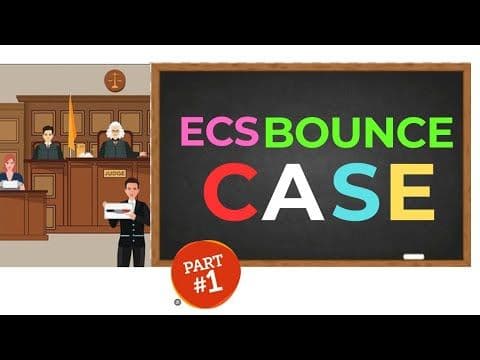
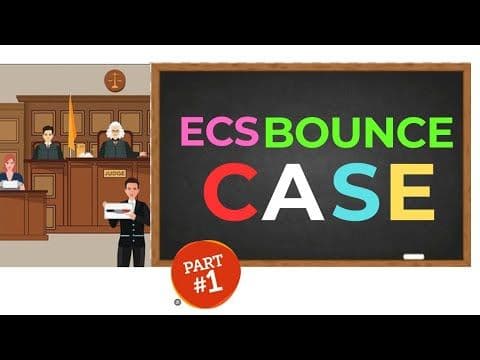
ECS Bounce Case: Meaning, Charges and Legal Steps Explained

Loan in
60 Minutes
Introduction
An ecs bounce case lands on a borrower's plate the day an auto-debit instruction for an EMI, insurance premium, or SIP fails, and the lender decides enough is enough. It isn't always because money ran short. Sometimes the mandate expired, sometimes the account got frozen for KYC reasons, sometimes the salary credit slipped by a day.
Whatever the trigger, the fallout is real: penalty fees pile up; CIBIL takes a hit, and in stubborn cases a magistrate summons shows up at the doorstep.
Borrowers planning a personal loan should read this carefully, because a bounce today can quietly shape what gets approved two years from now.
What an ECS Bounce Actually Is
ECS, short for Electronic Clearing Service, is one of the oldest auto-debit plumbing systems in the RBI set up. Signing an ECS mandate tells the bank: go ahead, pull ₹18,427 from this account on the 5th of every month, no questions asked. A bounce happens at the minute that pull fails.
The ecs bounce meaning isn't limited to "oops; the debit didn't go through." Lenders treat it the same way they treat a cheque returned with "funds insufficient" stamped across it. Penalty charges get slapped on; the incident gets reported to credit bureaus within 30 to 45 days, and in tougher cases the lender can invoke Section 25 of the Payment and Settlement Systems Act, 2007.
Why do ECS mandates fail? A handful of reasons dominate. Balance short on the debit date. Account closed or dormant. Signature mismatch on the NACH physical mandate. Mandate validity expired (most run for a fixed tenure). Stop payment left active by accident. And once in a while, a technical hiccup at the sponsor's bank, though those get reversed quickly.
ECS Bounce Charges: What Banks Actually Bill You
Every bank runs its own fee sheet, and the ecs bounce charges can sting in unexpected places. Most borrowers get billed twice for a single mistake: once by their own bank for returning the instruction, and again by the lender for the missed EMI. Throw in 18% GST on both, and a simple mistake becomes expensive.
Here's an indicative snapshot as of early 2026. Figures below exclude GST.
|
Institution |
Bounce Charge (₹) |
Additional Late Fee / Penal Interest |
|
State Bank of India |
₹295 |
2% per month on overdue EMI |
|
HDFC Bank |
₹550 |
₹450 flat late fee |
|
ICICI Bank |
₹500 |
2% per month on overdue |
|
Axis Bank |
₹500 |
24% annualised penal interest |
|
Kotak Mahindra Bank |
₹500 |
₹600 plus penal interest |
|
Punjab National Bank |
₹250 |
2% per month |
|
Bajaj Finance |
₹700 to ₹1,200 |
36% p.a. penal |
|
Most NBFCs (indicative) |
₹500 to ₹750 |
2% to 3% per month |
Run math on a real situation. EMI of ₹28,450, single bounce at an NBFC charging ₹700 plus 3% monthly penal interest. The borrower pays roughly ₹1,475 in fees and penalties for a one-month slip. Miss it twice in a quarter, and the bill crosses ₹4,200, which is before the compounding bite on the overdue principal shows up.
Fair warning: two or three bounces in a row often triggers a clause most borrowers forget they agreed to, the loan recall clause, which makes the entire outstanding amount payable right away.
From Bounce to Courtroom: How the Escalation Works
Not every bounce turns into an ecs bounce case at a magistrate's court. Lenders typically give the borrower several off-ramps before papers get filed. Missing all of them is usually what pushes the file legally.
The Internal Recovery Window
First 72 hours after a bounce is mostly damage-control time. Collections team rings up, SMS reminders pile up, and the lender usually reschedules the debit attempt inside 5 to 10 days. Clear the overdue EMI with the bounce fee during this stretch, and the file closes cleanly. Not much beyond the initial bureau report sticks.
The Legal Notice
Two EMIs in a row missed, or 30 days gone with no payment, and a lawyer notice shows up. Usually by registered post, sometimes email too. It gives 15 days to pay or respond. Ignoring it is, honestly, the worst call a borrower can make here. Every silent week after that notice becomes courtroom evidence later.
Criminal Complaint Under Section 25
Once that 15-day window is spent, the lender is free to walk into a magistrate court with a complaint under Section 25 of the PSS Act. The section treats an ECS dishonour as an offence that can draw up to two years behind bars, a fine of twice the dishonoured sum, or both together. Magistrate issues summons next. That's the envelope, nobody enjoys opening.
Parallel Civil Recovery
Separately, a lender can run a civil recovery suit, approach the Debt Recovery Tribunal if dues cross ₹20 lakhs, or trigger SARFAESI in a secured loan situation. Two or three fronts can open at the same time. Which is exactly why settling early usually costs far less than fighting on multiple benches at once.
Section 25 vs Section 138: Cousins, Not Twins
Ask around, and half the borrowers will tell you an ecs bounce case is just a cheque bounce case wearing different clothes. They're cousins. Not twins.
-
Section 138 of the Negotiable Instruments Act is the cheque one. Physical paper, signature, the whole drill
-
Section 25 of the PSS Act is the electronic one. ECS, NACH, e-mandates, UPI autopay, everything digital
-
Punishment ceiling is roughly identical on both: two years max, or fine, or both
-
15-day demand notice is mandatory before filing, no matter which section
-
Section 25 cases sometimes zip along faster because the digital log leaves less room to argue
Here's the catch. Defences that work in cheque matters (say, arguing the signature is fake) don't travel well to ECS matters because the mandate is digitally authenticated, and the audit log is pretty much airtight.
Jurisdiction: The Geography Problem and How It Got Fixed
For the longest time, the meanest surprise in an ecs bounce case was geography. A lender would file wherever the mandate got registered, which could be Guwahati while the borrower lived in Pune. Imagine taking a train across the country for a hearing.
The Supreme Court tightened this up over a string of rulings. Starting with Dashrath Rupsingh Rathod in 2014 and the follow-up 2015 amendment to Section 142(2) of the NI Act, the position became clearer: the case belongs where the payee's collecting branch is, not wherever the lender feels convenient. Got summons from a court 1,400 km away? Raise a territorial objection at hearing one itself. Push a transfer application through a local lawyer. Don't wait.
The Day the Summons Lands
Getting a magistrate's envelope feels awful, especially the first time. Moving fast beats sitting on it. Here's the playbook that holds up for most first-time defendants.
-
Show up. Skipping turns the case ex-parte, and unwinding an ex-parte order later costs far more than a morning off work
-
Hire a local criminal lawyer who's done Section 25 work before (end-to-end fees run ₹15,000 to ₹45,000)
-
Pull together bank statements, the loan agreement, payment receipts, and every SMS or email the lender sent
-
Write to the lender offering to settle, and ask for a No Objection Certificate once dues clear
-
Apply for bail at hearing one (Section 25 offences are almost always bailable)
-
If the court is far from home, file a transfer petition citing the Supreme Court line of rulings
Quick aside on how these actually end. A big chunk of ecs bounce cases fizzle out the minute the borrower clears dues, and the lender files a joint compounding application. Banks and NBFCs almost always pick up recovery over an 18-month courtroom grind.
The CIBIL Hit Nobody Mentions Upfront
Say the criminal side wraps up cleanly. The CIBIL scar? That sticks around. Each bounced EMI gets pushed to CIBIL, Experian, Equifax, and CRIF within about 45 days. A score parked at 782 can tumble to 694 after two misses. That's the difference between an ₹11 lakh approval and a flat rejection letter.
Repair is slow. Not glamorous. Pay the remaining EMIs on time for 12 straight months, keep card utilisation under 30%, and resist the urge to apply for fresh credit during the repair phase. That's the boring formula that works. Anyone unsure where they sit today should pull out a fresh report and look at the CIBIL score for personal loan benchmarks before hitting apply anywhere new.
How Finnable Reads an Application with a Past Slip
Finnable is an RBI-licensed NBFC based out of Bengaluru, and its underwriting doesn't stop at the CIBIL number. Salaried folks who had an ecs bounce case a year or two ago, but who have since got their banking back in order, can still qualify. The call depends on current income, employer quality, and recent account behaviour, not just the old stain.
The personal loan eligibility sheet is short. Indian citizen, age 21 to 55, minimum monthly salary of ₹15,000, six months or more with the current employer, CIBIL 675 and above. That 675 floor matters, because most traditional banks start at 750 and don't really negotiate.
On the product side: loan sizes run ₹50,000 to ₹10 lakhs. Rates sit between 15% and 30.99% per annum on reducing balance. Tenure options go from 6 months to 60 months. Disbursal, once approval clears, can happen in as fast as 60 minutes. Processing fee is capped at 4%, and the agreement doesn't hide charges in a later annexure.
Before anything else, it helps to plug numbers into the EMI calculator, scan current interest rates, and jump to check eligibility for a two-minute pre-check. The detailed how to apply for personal loan walkthrough covers documents, timelines, and the small things that trip first-time borrowers up.
Staying Ahead of the Next Auto-Debit Date
Preventing a bounce is always cheaper than defending one. Three habits knock out roughly 90% of accidental misses: a balance alert set 48 hours ahead of the debit date, a buffer of at least 1.5 times the EMI amount parked in the debit account, and aligning the EMI date with the salary-credit date.
Borrowers heading into a genuine cash crunch should call the lender before the bounce, not after, and ask about restructuring. Most NBFCs would rather reschedule one EMI than file papers. For anyone planning a new loan with clean intentions, Finnable's digital flow keeps the paperwork light and the approval window short.
About the Author

Technically, yes. Section 25 allows up to two years of imprisonment. Realistically, first-timers who cooperate and clear dues almost never see custody. Files usually close with a fine, or a straight withdrawal once payment lands.
The ecs bounce meaning goes back to the older RBI-run Electronic Clearing Service. NACH, run by NPCI, is the newer version doing the same job with better tech. Courts treat them the same under Section 25, and the ecs bounce charges schedule applies either way.
Roughly 36 months from the date the account turns regular. The sting on the score eases up after 12 to 18 months of clean repayments, though the entry itself stays visible for the full three years.
Yes. Section 25 allows for compounding. Borrower clears the overdue plus penalties, lender issues a NOC, both parties file a joint application, magistrate closes the file. Fairly routine, honestly.
Banks rarely touch the bounce fee itself. The late penalty and penal interest, though, are often open to discussion, especially for a first-time slip or a borrower with a long clean record. A written request with reasons works far better than a phone call to the helpline.
Introduction
What an ECS Bounce Actually Is
ECS Bounce Charges: What Banks Actually Bill You
From Bounce to Courtroom: How the Escalation Works
Section 25 vs Section 138: Cousins, Not Twins
Jurisdiction: The Geography Problem and How It Got Fixed
The Day the Summons Lands
The CIBIL Hit Nobody Mentions Upfront
How Finnable Reads an Application with a Past Slip
Staying Ahead of the Next Auto-Debit Date