
Credit Worthiness: What It Really Means for Indian Borrowers

Introduction
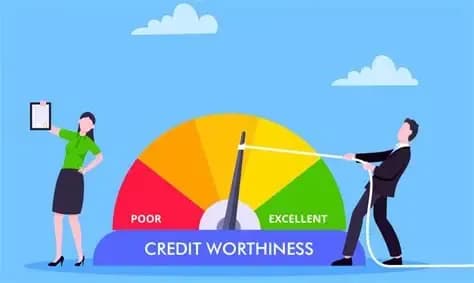
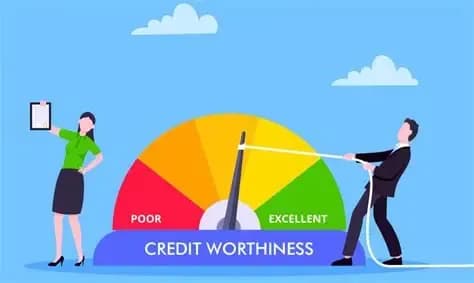
Credit worthiness is the measure lenders use to determine whether a borrower can be trusted to repay a loan on time and in full. To define creditworthiness precisely, it is the cumulative financial trust that a person builds through years of income management, debt repayment, and banking behaviour. In India, approximately 42% of personal loan applications end in rejection, and the primary reason is poor credit worthiness, not low income or bad intentions, but how lenders perceive repayment ability.
The score covers roughly 40% of the picture. The rest includes income consistency, existing debt burden, banking habits, employer profile, and credit utilisation patterns. Roughly 19 crore Indians carry thin credit files or no formal credit history whatsoever, making the score-only approach inadequate.
What Is Creditworthiness and How Is It Measured
Strip away the jargon: credit worthiness is a lender’s bet on whether someone will pay back borrowed money, on time, consistently, month after month. India’s primary measurement is the CIBIL score, ranging from 300 to 900. Above 750 is considered "good." Below 650 gets most applications auto-rejected at banks. But scores only tell part of the story.
Consider these creditworthiness examples. Priya in Hyderabad earns ₹58,000 monthly, has no existing loans, and ₹1.2 lakhs in savings. Her CIBIL score reads 720. Now look at Amit. Same 720 score. He earns ₹95,000, but ₹41,000 goes toward three running EMIs. Banks see identical numbers on paper. The actual risk is worlds apart.
|
Parameter |
Priya (Lower Score) |
Amit (Higher Income) |
|
CIBIL Score |
720 |
720 |
|
Monthly Income |
₹58,000 |
₹95,000 |
|
Existing EMIs |
₹0 (no loans) |
₹41,000 (3 running loans) |
|
Debt-to-Income Ratio |
0% (excellent) |
43% (red flag) |
|
Savings Buffer |
₹1.2 lakhs |
Minimal |
|
Actual Credit Worthiness |
Strong (low risk) |
Weak (high risk despite income) |
A proper credit worthiness check catches that difference. What goes beyond the score? Income reliability, debt burden, and how someone manages their bank account week to week. Banks have traditionally stuck to score plus salary slips. NBFCs cast a wider net. They usually factor in banking behaviour, employer category, and account patterns alongside the bureau data.
Key Factors That Determine Your Credit Worthiness
Multiple signals feed into the assessment. Understanding them gives real advantage during a credit health check.
|
Factor |
Weight in Assessment |
Bank Approach |
NBFC Approach (Finnable) |
|
CIBIL Score |
35-40% |
750+ required. Auto-reject below. |
675+ threshold. Evaluated alongside other signals. |
|
Income Stability |
20-25% |
Salary slips + Form 16 only. |
Salary credit regularity, employer reputation, tenure. |
|
Debt-to-Income Ratio |
15-20% |
Calculated from declared EMIs. |
Cross-verified with banking data. |
|
Banking Behaviour |
10-15% |
Largely ignored. |
Actively evaluated: balances, bounces, patterns. |
|
Credit Mix & Utilisation |
5-10% |
Card utilisation checked. |
Mix of secured + unsecured credit valued. |
Credit Score and Report
The CIBIL score is the starting point, not the finish line. Scores between 675 and 750 sit in the "moderate" range. One missed EMI (even a 90-day delay) can wipe 50 to 100 points off the score. That black mark hangs around for 36 months. Understanding factors affecting your score helps borrowers manage this proactively.
Income Consistency and Job Stability
Picture two applicants. One is salaried at ₹40,000 per month at a well-known company, steady deposits every 1st of the month. The other freelances, earning ₹80,000 some months and ₹25,000 in others. Lenders pick the first person almost every time. Predictability matters more than peak income. Many lenders require minimum 6-month tenure at the current organisation and evaluate employer reputation when checking personal loan eligibility.
Employees at smaller companies get hit hard by this factor. A marketing executive taking home ₹52,000 at a 30-person startup in Bengaluru? Banks with "approved company" lists might not even process that application. NBFCs have filled this gap, which is partly why they have grown rapidly among younger, startup-employed borrowers.
The Debt-to-Income Ratio
Most borrowers do not think about this number. They should. If existing EMIs eat up more than 40% to 50% of monthly take-home, lenders see a red flag. Meera, a 28-year-old HR manager in Pune, earns ₹55,000. She pays ₹8,500 for a car loan and ₹3,200 as credit card minimum. Her ratio sits at about 21%, perfectly healthy. Adding a ₹7,000 personal loan EMI brings it to 34%. Still fine. Past 45%? Most applications stall.
Banking Behaviour (the Factor Nobody Talks About)
This separates NBFC evaluations from the traditional bank approach. Their credit worthiness check includes how someone manages their savings account. Frequent bounced auto-debits? Bad sign. Consistently low end-of-month balances? Another flag. Steady salary credits with maintained minimum balances? Positive signal. Most banks ignore this data entirely.
Credit Mix and Card Utilisation
This is one of those creditworthiness examples that surprises people: holding a credit card and a small loan simultaneously actually helps, because it shows a lender that someone can handle multiple obligations. Credit card utilisation above 30% of the limit is a concern. Someone maxing out a ₹2 lakh card every month (even if they pay it off) looks riskier than someone who keeps usage under ₹60,000.
How Lenders Perform a Credit Worthiness Check
The process varies wildly depending on whether an applicant approaches a bank or an NBFC.
The Bank Route
Pull CIBIL. Score below 750? Rejected, often without further review. Verify salary through pay slips and Form 16. Cross-reference employer against an internal "approved companies" list. Timeline: 3 to 7 working days minimum. The algorithm runs tight, with little room for context.
The NBFC Approach (How Finnable Does It)
Finnable’s minimum CIBIL threshold is 675. The evaluation goes past the score into employment stability, banking patterns, and income consistency. Everything happens digitally.
Take Rohan, a 31-year-old developer at a mid-sized Bengaluru startup. CIBIL score: 690. Monthly salary: ₹72,000. Tenure at current company: 14 months. Average bank balance: ₹45,000. A bank might reject him on score alone. Finnable evaluates the full profile. That is one of the clearest creditworthiness examples of how NBFC lending has matured. Applicants can check eligibility online in minutes, and disbursal happens as fast as 60 minutes after approval.
First-Time Borrowers: The Overlooked Group
Roughly 35 crore working-age Indians have never taken a formal loan. Their credit file shows "NH" (no history) or "-1" (not available). Banks largely cannot process these applications through standard scoring models.
Finnable evaluates first-time borrowers differently, using employment stability, salary credit regularity, and banking behaviour as proxies for repayment reliability. No history does not automatically equal bad history. It just requires a different evaluation framework. Checking your free credit score is a good starting point even for first-time borrowers.
Improving Your Credit Worthiness for Better Loan Terms
A borrower’s financial profile is not permanent. It moves, sometimes fast. The right actions can shift a profile within 30 to 90 days.
|
Action |
Timeline |
Expected Score Impact |
|
Clear overdue balances |
30-45 days (one reporting cycle) |
+30 to 50 points |
|
Reduce card utilisation below 30% |
1-2 billing cycles |
+20 to 40 points |
|
Dispute credit report errors |
About 30 days for resolution |
Significant if errors corrected |
|
Get secured credit card (thin files) |
6-8 months to build signals |
Establishes positive credit history |
|
Maintain clean banking behaviour |
Ongoing (3+ months minimum) |
Improves NBFC evaluation significantly |
Clear Overdue Balances First
Nothing hampers a score like unpaid dues sitting on the report. Clearing overdue amounts registers with the bureau within one reporting cycle, roughly 30 to 45 days. Even partial payment helps, though wiping it clean entirely always works better.
Get Credit Card Utilisation Under 30%
Someone using ₹1.2 lakhs of a ₹1.5 lakh card limit runs at 80% utilisation. That screams risk to lenders. Paying down to ₹40,000 or below can push the score up by 20 to 40 points across one or two billing cycles. This is probably the fastest single lever for improving a CIBIL score.
Dispute Errors on the Credit Report
About 1 in 5 credit reports contains at least one mistake. Wrong account statuses, late payments flagged incorrectly, loans listed that someone never took. Filing a dispute with CIBIL takes about 30 days. If the error gets corrected, the score impact can be significant.
Build History Strategically (For Thin Files)
Someone with no credit history at all should get a secured credit card, backed by a fixed deposit (typically ₹15,000 to ₹25,000). After 6 to 8 months of paying the bill on time, the credit profile develops real positive signals. A small personal loan after that adds to the mix.
Keep Banking Behaviour Clean
Bounced auto-debits, dipping below minimum balance repeatedly, irregular salary credits. All of these show up during an NBFC’s evaluation process. Think of the savings account as a character reference that nobody asks for, but everyone reads.
Making Credit Worthiness Count When Applying for Loans
A borrower’s financial standing is not a permanent stamp. It moves with every decision. Clearing an old ₹8,000 credit card due help. Keeping the savings account above minimum balance for three straight months helps. Staying at a job for six more months instead of switching helps too.
The way experts define creditworthiness has evolved from a single number to a layered evaluation. Banks still lean on CIBIL scores and pre-approved employer lists. NBFCs usually look at the full picture, weighing income consistency, employer reputation, and account patterns alongside the bureau score. For younger professionals, those at mid-size companies, or anyone who has heard "application rejected" before, this shift matters.
About the Author

It tells lenders how much they can trust a borrower to pay back on time. CIBIL score feeds into it, but so does income stability, existing debt, and whether past EMIs were paid without delays. Someone who cleared every EMI for five straight years looks very different from someone who missed two payments in 2024, regardless of whether both earn ₹60,000 monthly.
It starts with the CIBIL report. Banks stop there more often than they should. They verify salary through pay slips, calculate the debt-to-income ratio, and move on. NBFCs dig deeper. Their credit health check usually includes employer reputation, account balance trends, and salary credit consistency. That wider lens catches patterns a score alone misses.
Within 30 to 90 days, absolutely. Clear overdue balances first; that single move can add 30 to 50 points. Bring credit card usage under 30% of the total limit. Pull the CIBIL report and look for errors. Disputes get resolved in about a month. These are practical, creditworthiness examples of things that work fast. Clean banking habits help too, particularly with NBFCs that actually weigh those signals.
Introduction
What Is Creditworthiness and How Is It Measured
Key Factors That Determine Your Credit Worthiness
How Lenders Perform a Credit Worthiness Check
Improving Your Credit Worthiness for Better Loan Terms
Making Credit Worthiness Count When Applying for Loans


