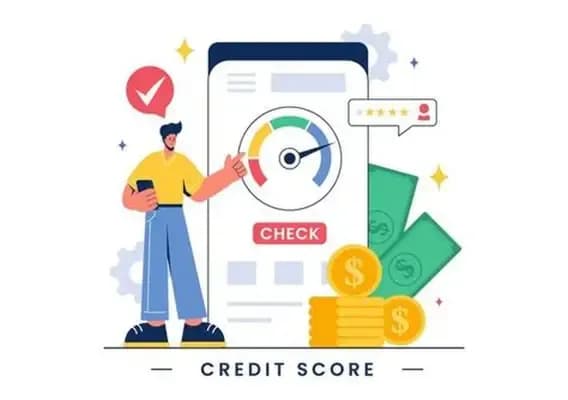
779 CIBIL Score: Is It Good? Benefits, Loans & How Close You Are to 800

Loan in
60 Minutes
At 779, you're 29 points above the excellent threshold and just 21 from exceptional. This is premium borrower territory by any measure.
Lenders see 779 and roll out their best offerings. You've earned this through years of responsible credit management. The financial world treats you as a preferred customer, and that translates to tangible benefits across every credit product.
But what exactly separates you from someone at 750 or someone at 800? Is 779 CIBIL score good? how do you make the most of your strong credit position?
How a 779 Score Fits in the Credit Rating Scale
Let's be specific about where you stand:
|
Score Range |
Category |
Your Position |
|
300-549 |
Poor |
Far behind you |
|
550-649 |
Fair |
You've surpassed this |
|
650-699 |
Average |
Better than this |
|
700-749 |
Good |
You've crossed this |
|
750-799 |
Excellent |
779 - Upper tier, approaching exceptional |
|
800-900 |
Exceptional |
Just 21 points away |
You're in the upper portion of excellent. That positioning matters because you're within striking distance of 780, a threshold many super-premium products specifically look for.
So, is 779 CIBIL score good? Yes, here’s what makes 779 special. You’re close enough to 780 that a single billing cycle with low utilisation could push you there. You already enjoy virtually all the benefits that come with exceptional scores.
Is 779 CIBIL Score Good?
Impact on Loan Approvals
Is 779 CIBIL score good? Absolutely. At 779, loan approvals become straightforward across all product types. You're not just getting approved, you're getting approved with premium terms.
Home Loans: Banks pre-approve you at competitive rates. Your application moves to the front of processing queues. Loan-to-value ratios max out at 80-90%.
Personal Loans: NBFCs like Finnable and banks compete for your business. At 779, you're accessing rates that borrowers at 700 can only dream about. Same-day processing becomes standard rather than exceptional.
Car Loans: Top-tier rates on both new and used vehicles. Extended tenures available without rate penalties.
Check your personal loan eligibility to see specific amounts available at your score level.
What Lenders Think of a 779 Score
From a lender's perspective, your 779 credit score signals several things:
Payment Discipline: You've demonstrated years of on-time payments. At 779, you've likely never missed a payment or have only very old blemishes that barely affect your score now.
Credit Responsibility: You manage utilisation well. You don't max out cards. You understand how credit works.
Low Default Risk: Statistical models show borrowers at 779 have default rates under 2%. That's why lenders actively court your business.
Banks don't just approve you at 779, they want you. Relationship managers reach out with pre-approved offers. Processing fees get waived. Rate negotiations actually work in your favour.
Comparing 779 with Higher and Lower Scores
The practical differences at various score levels:
At 750: You're in excellent territory, but at the lower end. Rates are good, but negotiation power is limited.
At 770: Better than 750, but still in mid-excellent range. Most premium products are accessible.
At 779 (You): Upper excellent, approaching exceptional. Nearly all products available at best rates. One point from 780 threshold.
At 785: Exceptional territory. Marginal improvement over 779 in practical terms.
At 800+: Psychological milestone. Financial benefits barely differ from 779.
The gap between 779 and 750 is substantial. The gap between 779 and 800? Minimal in practical impact.
Factors That Influence Your CIBIL Score
Payment History
This carries 35% of your score weight. At 779, your payment history is clearly strong. You've built a multi-year track record of on-time payments across multiple accounts.
Even one 30-day late payment can drop you 60-80 points. That would knock you from 779 down to 700-720, erasing years of disciplined behaviour. This is why autopay is essential.
Understanding how CIBIL score is calculated helps you see why payment history dominates the formula.
Credit Utilisation and Limits
This accounts for 30% of your score. At 779, you're likely keeping utilisation under 30%, probably closer to 20%.
Here's what most people miss: CIBIL receives your statement balance, not your payment date balance. If you have ₹3 lakhs in limits and your statement shows ₹60,000 (20% utilisation), that's what CIBIL sees; even if you pay it off the next day.
To optimise this factor: pay before your statement date. If your statement generates on the 5th, pay your balance on the 3rd. CIBIL sees a much lower balance reported.
Existing Debt and Credit Mix
Credit mix carries 10% weight. At 779, you likely have both revolving credit (cards) and instalment loans (personal/home/auto).
Having both types shows you can manage different credit structures. Someone with only credit cards or only loans typically score lower than someone with a mix, all else being equal.
That said, don't take debt just to improve mix. The 10% impact doesn't justify unnecessary borrowing. Mix improves naturally when you actually need different credit types.
Credit Inquiry Impact
Hard inquiries from loan applications account for 10% of your score. Each inquiry can temporarily knock off 2-5 points.
At 779, you don't need to shop around extensively. Your score already qualifies you for best rates. Apply where you have existing relationships first, then branch out only if needed.
Two inquiries per year? Barely noticeable. Six inquiries in six months? That's 12-30 points gone, which could drop you from 779 to 750.
How to Maintain and Improve a 779 CIBIL Score
Timely Bill Payments
Set up autopay for at least the minimum payment on every credit account. This is non-negotiable at 779. You've worked too hard to build this score to risk losing 60-80 points from one missed payment.
Create redundancy: Autopay for minimums, calendar reminders 5 days before due dates, and SMS alerts when payments process. Technology fails occasionally; you need backup systems.
Life gets busy. Bills get overlooked. But at 779, you can't afford that mistake. Autopay eliminates the risk entirely.
Reducing Credit Card Balances
Target under 10% utilisation if you want to push toward 800. At 20%, you're maintaining 779 well. Above 30%, you risk dropping.
Strategy: Pay before statement date. If you spend ₹50,000 monthly on a ₹2 lakh limit card, that's 25% utilisation if you pay after the statement. Pay before statement date, and CIBIL sees near-zero utilisation.
Alternative: Request credit limit increases. If you have ₹3 lakhs in limits and spend ₹60,000 monthly, that's 20%. Increase limits to ₹4 lakhs with same spending, and you're at 15%.
Use the EMI calculator to see how your credit usage affects borrowing costs across different scenarios.
Avoiding Frequent Loan Applications
Each application creates a hard inquiry that stays on your report for 2 years and impacts your score for 6-12 months.
At 779, you don't need to test the market extensively. Your score already qualifies you for best available rates. Apply strategically:
1. Check pre-approved offers first (soft inquiry, no score impact)
2. Apply to your existing bank relationship
3. If needed, apply to one or two additional lenders
4. Stop after 2-3 applications maximum
Six applications in search of 0.2% better rate could cost you 30 points, which actually increases your rate on future loans.
Monitoring Your Credit Report
Check quarterly. Not for score-watching, but for error detection and fraud prevention.
What to look for:
Unknown accounts: Someone opened credit in your name. Dispute immediately.
Incorrect late payments: Banks report errors. If you have proof of on-time payment, dispute it.
Wrong account status: Settled loans showing as active defaults hurt your score unnecessarily.
Learn to properly read your CIBIL report so you know what requires action and what's normal reporting.
779 Credit Score vs Other Credit Scores
Difference Between CIBIL Score and Credit Score in India
People often ask: Is there a difference between a 779 credit score and a 779 CIBIL score in India?
CIBIL is one of four credit bureaus in India (CIBIL, Experian, Equifax, CRIF High Mark). When people say "credit score" in India, they typically mean CIBIL score because CIBIL is the oldest and most widely used.
Your 779 CIBIL score is a credit score specifically, it's the score generated by CIBIL's scoring algorithm based on your credit report data.
Understanding the difference between credit score and CIBIL score helps clarify this common confusion.
What 779 Gets You: Product-Specific Benefits
Let's be specific about what your 779 credit score unlocks across different financial products.
Personal Loans at 779
Banks offer:
• Interest rates: 10.5-13.5% p.a.
• Amounts: ₹50,000 to ₹40 lakhs (income-dependent)
• Processing: Priority handling, often same-day
• Terms: Maximum flexibility on tenure
NBFCs compete with:
• Interest rates: 15-22% p.a. (you get lower end at 779)
• Amounts: ₹50,000 to ₹10 lakhs
• Processing: As fast as 60 minutes
• Evaluation: Holistic profile review
Here's where Finnable fits. As an RBI-licensed NBFC, Finnable offers personal loans from ₹50,000 to ₹10 lakhs with interest rates ranging from 15% to 30.99% p.a. based on your complete credit profile.
At 779, you're positioned for competitive rates on the lower end of that range. What sets Finnable apart is their holistic evaluation, we don't just look at your score. They consider income stability, employer reputation, banking behaviour, and overall financial health.
Processing fees are up to 4%, and disbursal can happen in as fast as 60 minutes after approval. While typically work with CIBIL scores of 675 and above, we also evaluate first-time borrowers with no credit history.
Home Loans at 779
Expected rates: 8.2-8.45% p.a.
Loan-to-value: 80-90% of property value
Processing: Fast-tracked priority handling
Pre-approval: Highly likely from existing bank relationships
This is where your 779 delivers maximum long-term value. Even a 0.5% rate difference compounds massively over 20-year tenures.
Car Loans at 779
New cars: 7.25-8.5% p.a.
Used cars: 9-11.5% p.a.
Tenure: Up to 7 years
Processing: Often same-day approval
Straightforward approvals with top-tier rates across all vehicle categories.
Disclaimer: The interest rates, loan amounts, and processing timelines mentioned above are indicative and based on prevailing market trends.
Premium Credit Cards at 779
Easily Available:
• HDFC Regalia and Diners Club
• Axis Magnus and Privilege
• SBI Elite and Aurum
• Amex Gold and Platinum Travel
• Super-premium travel cards
• High-tier rewards cards
Accessible (780+ preferred but 779 often approved):
• HDFC Infinia (with strong income)
• Diners Club Black
• Axis Reserve
You're just one point from 780. That one-point difference rarely affects actual approvals—strong income documentation matters more at this level.
Real Savings: What 779 Means in Rupees
Numbers tell the real story. Let's quantify exactly what your excellent score saves you:
Home Loan: ₹45 Lakhs, 20 Years
|
Score |
Interest Rate |
Monthly EMI |
Total Interest |
|
779 |
8.3% p.a. |
₹38,380 |
₹47.11 lakhs |
|
680 |
10% p.a. |
₹43,430 |
₹59.23 lakhs |
|
Your Savings |
— |
₹5,050/month |
₹12.12 lakhs |
Personal Loan: ₹6 Lakhs, 4 Years
|
Score |
Interest Rate |
Monthly EMI |
Total Interest |
|
779 |
15% p.a. |
₹16,680 |
₹2.01 lakhs |
|
680 |
23% p.a. |
₹18,920 |
₹3.08 lakhs |
|
Your Savings |
— |
₹2,240/month |
₹1.07 lakhs |
Your excellent 779 credit score saves you ₹12+ lakhs on a home loan and ₹1+ lakh on a personal loan. These aren't small differences—they're life-changing amounts.
Disclaimer: The figures, interest rates, EMIs, and savings mentioned above are indicative and for reference purposes only. Actual terms may vary based on lender policies, applicant profile, and market conditions.
Common Misconceptions About CIBIL Scores
"I need 800 to get the best rates"
False. At 779, you're already accessing premium rates. The gap between 779 and 805 typically affects interest rates by 0.1-0.2% at most. On a ₹5 lakh loan, that's about ₹300-500 total difference over 3 years.
"Checking my score lowers it"
Partially true. YOU checking your own score (soft inquiry) doesn't affect it. LENDERS checking your score for applications (hard inquiry) does affect it by 2-5 points temporarily.
"I should avoid using credit to maintain my score"
Wrong. Active, responsible credit use helps your score. Unused credit doesn't contribute as much. Keep cards active with small regular purchases, paid in full.
"Closing old credit cards improves my score"
Actually hurts it. Closing cards reduces your available credit (increasing utilisation) and shortens your average account age. Keep old cards active even if you don't use them much.
"One point won't make a difference (778 vs 779)"
Mostly true, but 780 is a threshold some lenders specifically look for. Going from 779 to 780 can occasionally open additional card approvals. Going from 779 to 778? Zero practical difference.
The 800 Question: Should You Pursue It?
You're 21 points from exceptional status. Is crossing 800 worth the effort?
Reality Check
You're already getting premium treatment across all products. The practical difference between 779 and 805 is minimal. Both access the same loans at virtually identical rates. Both get approved for the same credit cards.
800 is a psychological milestone. It feels good to hit exceptional status. But financially? The benefits barely differ from where you are now.
If You Want to Cross 800
Actions required:
• Keep utilisation under 10% for 3-5 months
• Perfect payments without exception
• Zero new applications for 6+ months
• Let accounts age naturally
Timeline: 3-6 months with focused effort.
When 800 Actually Matters
• Ultra-premium invite-only cards
• Maximum negotiating leverage on very large loans
• Personal satisfaction of exceptional status
That's about it. For 99% of financial products, 779 and 805 are treated identically.
Protecting Your 779: Critical Actions
Your score can drop faster than it rose. One mistake can erase months of disciplined behaviour.
What Can Damage Your 779:
One missed payment: Costs 60-80 points. Drops you to 700-720.
High utilisation spike: 25-40 point temporary drop if you max out cards.
Multiple applications: 5-6 hard inquiries in 6 months can cost 25-30 points.
Closing old accounts: Shortens credit history, increases utilisation ratio.
Protection Strategy:
Payment perfection: Autopay everything. Zero tolerance for late payments.
Utilisation discipline: Stay under 20%. Under 10% if pushing for 800.
Application restraint: Only apply when truly needed. Your 779 already qualifies you for premium products.
Fraud monitoring: Check reports quarterly. Catch identity theft early.
Understanding the minimum CIBIL score for personal loan requirements helps you appreciate the significant buffer you've built at 779.
Ready to Leverage Your Excellent Credit?
Your 779 CIBIL score represents years of financial discipline. Whether you're planning a major purchase, consolidating debt, or funding a personal goal, you're in an excellent position to secure premium terms.
Apply for a personal loan and see how Finnable's holistic evaluation approach works for borrowers with strong credit profiles like yours. At 779, you're positioned for competitive rates and fast processing.
About the Author

Yes. 779 falls in the excellent category (750-799), specifically in the upper tier approaching exceptional. You're 29 points above the excellent threshold, placing you among the top 10-12% of Indian credit users.
Absolutely. At 779, home loan approvals are straightforward with competitive rates around 8.2-8.45% p.a. You'll get priority processing, high loan-to-value ratios (80-90%), and pre-approved offers from banks where you have relationships. Your score removes the primary approval obstacle—lenders focus on verifying income and employment rather than questioning creditworthiness.
Check quarterly, once every three months. This frequency catches errors and fraud early without obsessive score-watching. Your score doesn't change daily, so checking more often provides no additional value. Set a calendar reminder and make it routine. Use soft-pull methods (checking your own score) which don't affect your score, unlike hard inquiries from lender applications.
Yes, if you're currently running high utilisation. Paying down balances reduces your credit utilisation ratio, which accounts for 30% of your score. At 779, you're likely already under 30% utilisation. Dropping below 10% could add 10-15 points over several months, potentially pushing you to 790+. Pay before statement date for maximum impact, CIBIL sees your statement balance, not your payment date balance.
In India, these terms are often used interchangeably. CIBIL is one of four credit bureaus (along with Experian, Equifax, and CRIF High Mark). When people say "credit score" in India, they typically mean CIBIL score since CIBIL is the oldest and most widely used. Your 779 CIBIL score is a credit score—specifically, the score generated by CIBIL's algorithm. You might have slightly different scores at other bureaus (775-783 range), but all would be categorised as excellent.
How a 779 Score Fits in the Credit Rating Scale
Is 779 CIBIL Score Good?
What Lenders Think of a 779 Score
Comparing 779 with Higher and Lower Scores
Factors That Influence Your CIBIL Score
How to Maintain and Improve a 779 CIBIL Score
779 Credit Score vs Other Credit Scores
What 779 Gets You: Product-Specific Benefits
Common Misconceptions About CIBIL Scores
The 800 Question: Should You Pursue It?
Protecting Your 779: Critical Actions
Ready to Leverage Your Excellent Credit?